 Home
Home Plan your visit
  Jungle
  Tropical
  Deep Ocean
  School Visits
 Encyclopedia
 Blog
Blog


What do sharks eat? Secrets of their diet
When we think about a shark’s diet, most of us picture scenes of frantic hunting. However, the reality of these “doctors of the ocean” is far more complex and fascinating. With more than 500 species inhabiting our seas, their diet ranges from tiny plankton to large prey.
In this article, we dive into the depths to discover not only what sharks eat, but also the remarkable evolutionary adaptations they have developed over more than 400 million years.
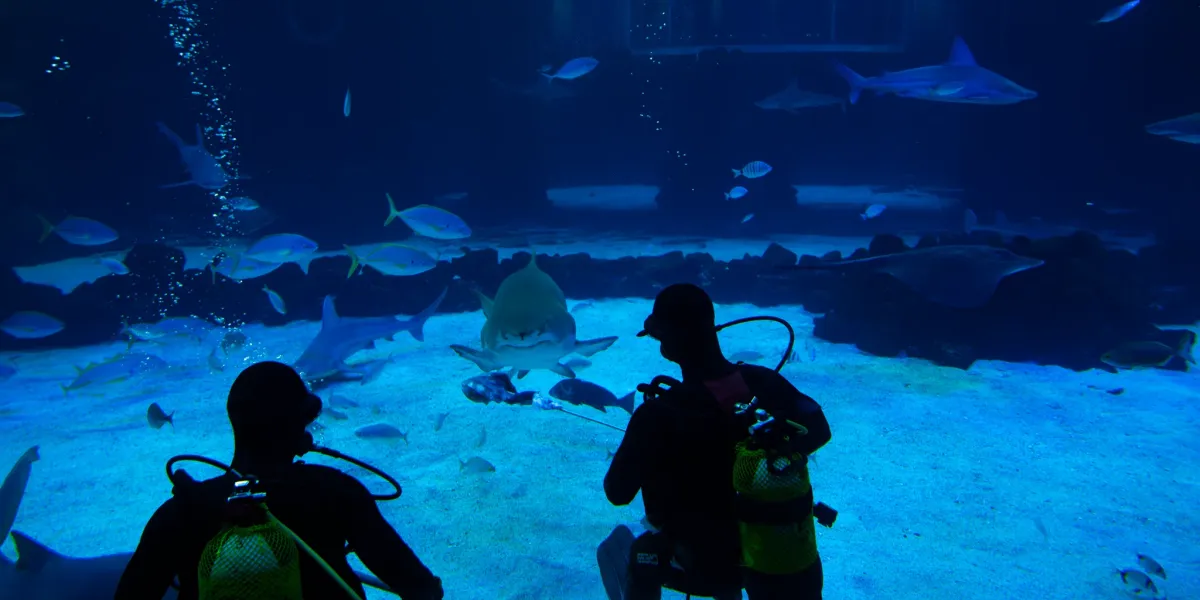
What is a shark’s digestive system like?
Sharks have a relatively simple digestive system, although it includes some highly specialised features. Their mouths contain numerous rows of sharp teeth that are constantly replaced throughout their lives, as sharks can easily lose them while catching prey because their teeth do not have roots.
They have a short oesophagus that connects to a large stomach, usually J-shaped, where food is stored and digestion begins. This process can last from a few hours to several days, depending on the species and the size of the prey. At the end of the stomach is the pylorus, a structure that regulates the passage of food into the intestine.
Another notable feature is their ability to regurgitate stomach contents. This behaviour allows them to expel indigestible or potentially harmful materials and, on rare occasions, may also serve as a defence mechanism by reducing visibility for potential predators.
The intestine contains a structure called the spiral valve, made up of internal folds that increase the surface area available for nutrient absorption. The shape of this valve can vary between species.
Once the nutrients have been absorbed, waste passes into the rectum and is expelled through the cloaca, a common opening shared by the digestive, urinary and reproductive systems.
What do sharks eat?
All sharks are carnivorous, including those that filter-feed on plankton, and their diet varies greatly depending on the species. They feed on fish, crustaceans, molluscs, cephalopods such as octopus and squid, and, in some cases, marine reptiles.
They are highly efficient predators that use multiple senses to detect their prey, including the ability to perceive vibrations in the water and electrical fields. Once they have located their target, they approach stealthily before launching a rapid attack.
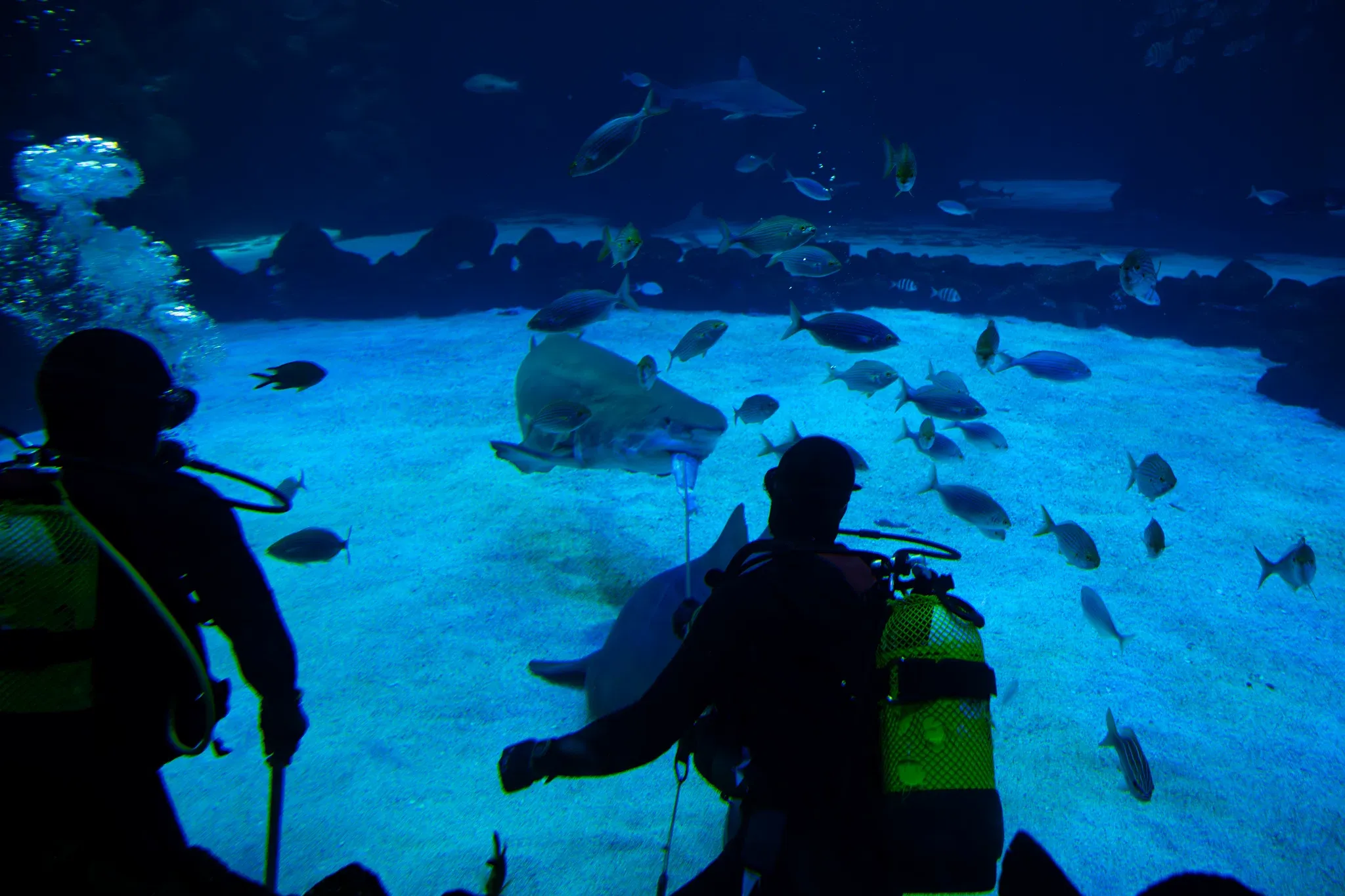
Sharks of the Canary Islands
1. Angelshark (Squatina squatina)
Angelsharks are mainly benthic carnivores that feed on small fish, crustaceans and cephalopods. They use their camouflage to ambush prey on sandy or muddy seabeds, striking quickly when an animal comes close. They may also feed on rays and other marine invertebrates, and occasionally on birds.
2. Shortfin mako shark (Isurus oxyrinchus)
Shortfin mako sharks are fast, voracious predators that feed mainly on pelagic fish, such as tuna, mackerel and sardines, as well as squid. However, their diet can also include other sharks, rays, sea turtles, porpoises and dolphins, showing that they adapt their feeding habits according to prey availability.
3. Great white shark (Carcharodon carcharias)
The great white shark is an apex predator whose diet changes with age: juveniles feed on fish, while adults include marine mammals and carrion, such as whale remains, in their diet.
4. Basking shark (Cetorhinus maximus)
The basking shark is a filter feeder that consumes zooplankton, especially small crustaceans such as krill. It swims slowly with its mouth open, allowing water to pass through its gills, where these microscopic organisms are trapped.
5. Whale shark (Rhincodon typus)
Like the basking shark, the whale shark filter-feeds on plankton, fish eggs and small organisms such as krill.
6. Hammerhead shark (Sphyrna zygaena)
The hammerhead shark is an opportunistic carnivorous shark with a varied diet that includes small fish such as hake, cephalopods such as octopus, and crustaceans such as lobsters.
Loro Parque Fundación, together with the Canary Association for Research and Conservation, studies the presence of hammerhead sharks in these waters in order to expand knowledge of their distribution and conservation status.
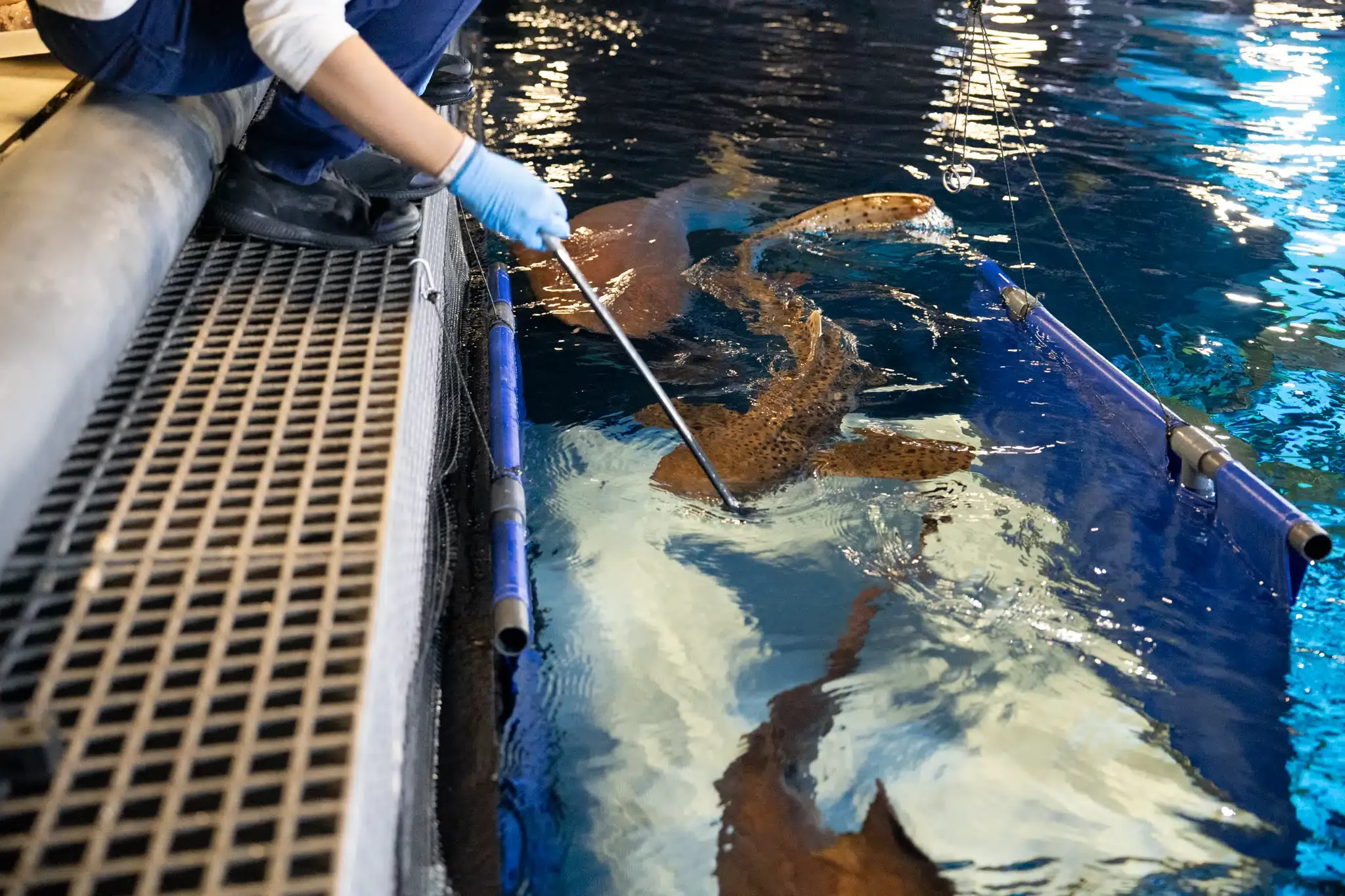
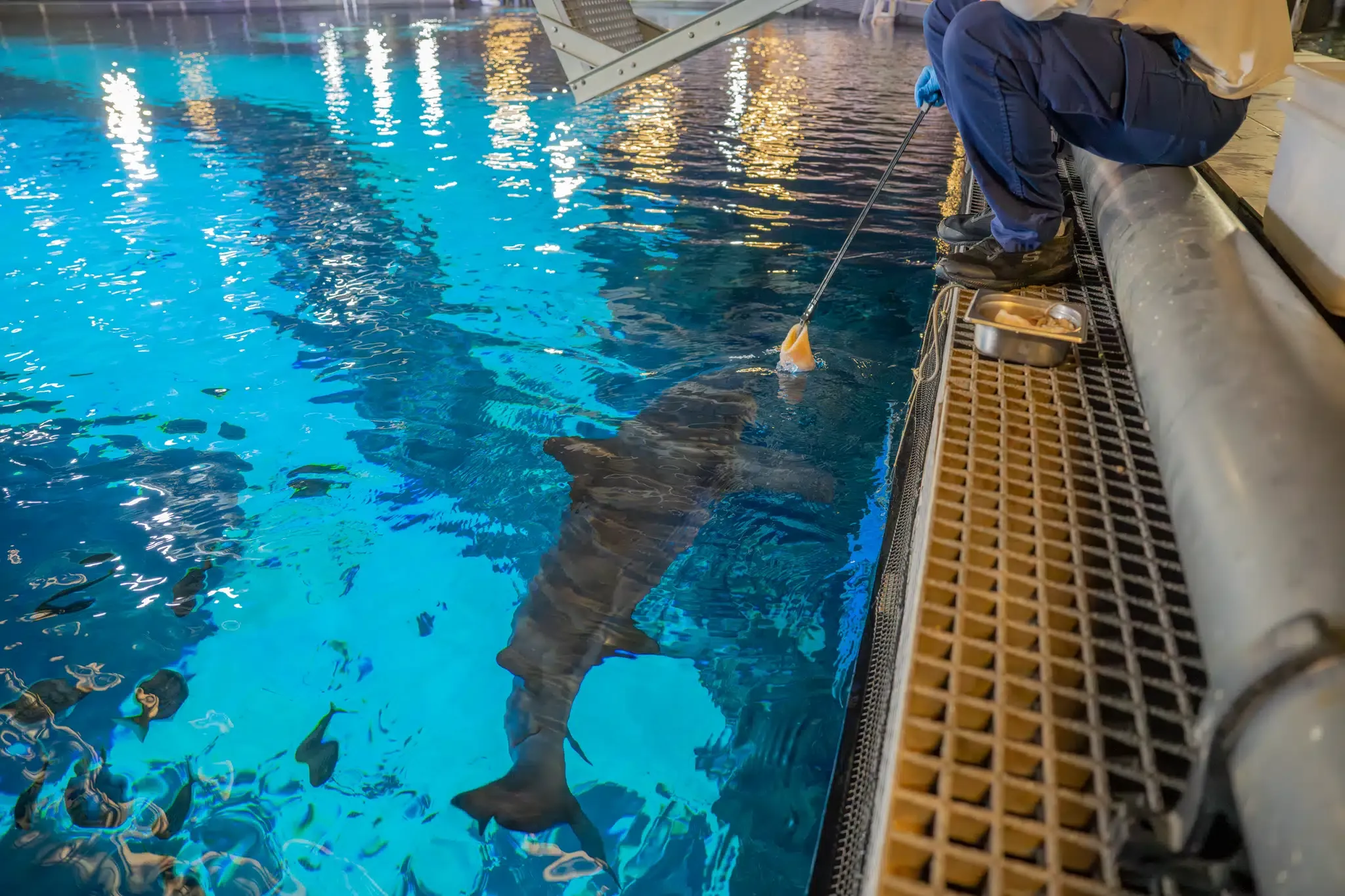
Sharks at Poema del Mar
If you are fascinated by sharks, the great kings of the ocean, you have probably wondered what they eat.
At Poema del Mar, we invite you to discover the diet of the animals that live in our aquarium.
In areas such as the Deep Sea, maintaining the balance of the ecosystem requires carefully planned feeding to ensure the wellbeing of each species and, as far as possible, recreate its natural diet.
1. Bull shark (Carcharhinus leucas)
The bull shark has a highly varied diet that includes fish, rays, sea turtles, cephalopods, seabirds and, occasionally, marine mammals. It is an opportunistic predator that adapts its diet according to prey availability.
In aquariums, its diet is based on fish, cephalopods and other animal-based foods adapted to its nutritional needs.
> More information about the Bull shark
2. Sand tiger shark (Carcharias taurus)
The sand tiger shark is a carnivorous shark that feeds on fish, small sharks, rays, crustaceans and squid. Although it can consume large amounts of food, it does not necessarily eat every day, as many sharks alternate between feeding and fasting periods.
In controlled environments, its diet consists of fish and other specially adapted foods.
> More information about the Sand tiger shark
3. Smooth-hound shark (Mustelus mustelus)
The smooth-hound shark is an opportunistic carnivore that feeds mainly on crustaceans, such as crabs and Norway lobsters, cephalopods, including octopus and squid, and small fish. It uses its adapted jaws to crush hard-shelled prey and usually feeds close to the seabed.
4. Zebra shark (Stegostoma tigrinum)
The zebra shark is a benthic species that feeds mainly on seabed invertebrates, such as crustaceans and molluscs, including bivalves and gastropods, as well as small fish. On occasion, it may also feed on sea snakes.
It uses suction to capture its prey and is capable of consuming organisms with shells or hard exoskeletons. Juveniles feed on smaller, softer prey, while adults maintain a similar diet, more frequently including larger invertebrates and fish.
The guardians of marine balance are at Poema del Mar
Sharks play the role of top predators and are essential for maintaining the balance of marine ecosystems. Their feeding habits help regulate fish populations and contribute to the overall health of the ocean, both in the wild and in controlled environments.
Their diet reflects a remarkable adaptation to their surroundings: each species has developed different strategies according to its habitat and behaviour. From the camouflaged angelshark to the powerful bull shark, they are all the result of millions of years of evolution.
Do you want to experience it in person?
Seeing these animals up close is a unique experience. Watching how they move through the water and observing their behaviour first-hand offers a deeper understanding of their way of life.
At Poema del Mar, you can discover sharks and other marine species, and even watch feeding sessions led by experts. It is a way to immerse yourself in the ocean without leaving Las Palmas de Gran Canaria.