Home
 Plan your visit
 Jungle
 Tropical
 Deep Ocean
 Guided Tours
 Encyclopedia
 Blog


Longsout seahorse
Family: Syngnathidae | Genus: Hippocampus
Seagrass meadows and coral reefs | Carnivore | Western Atlantic | Up to 17.5 cm
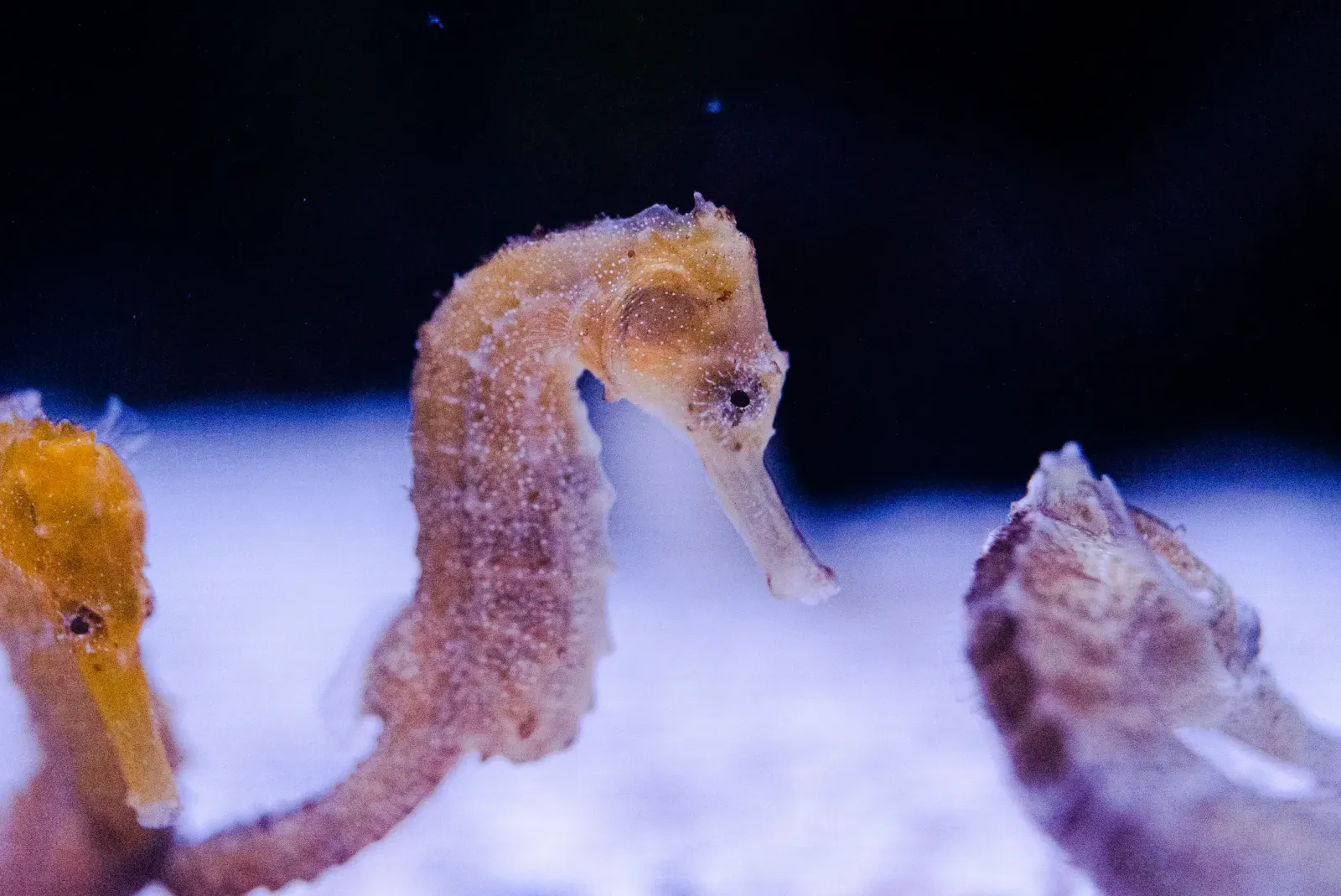
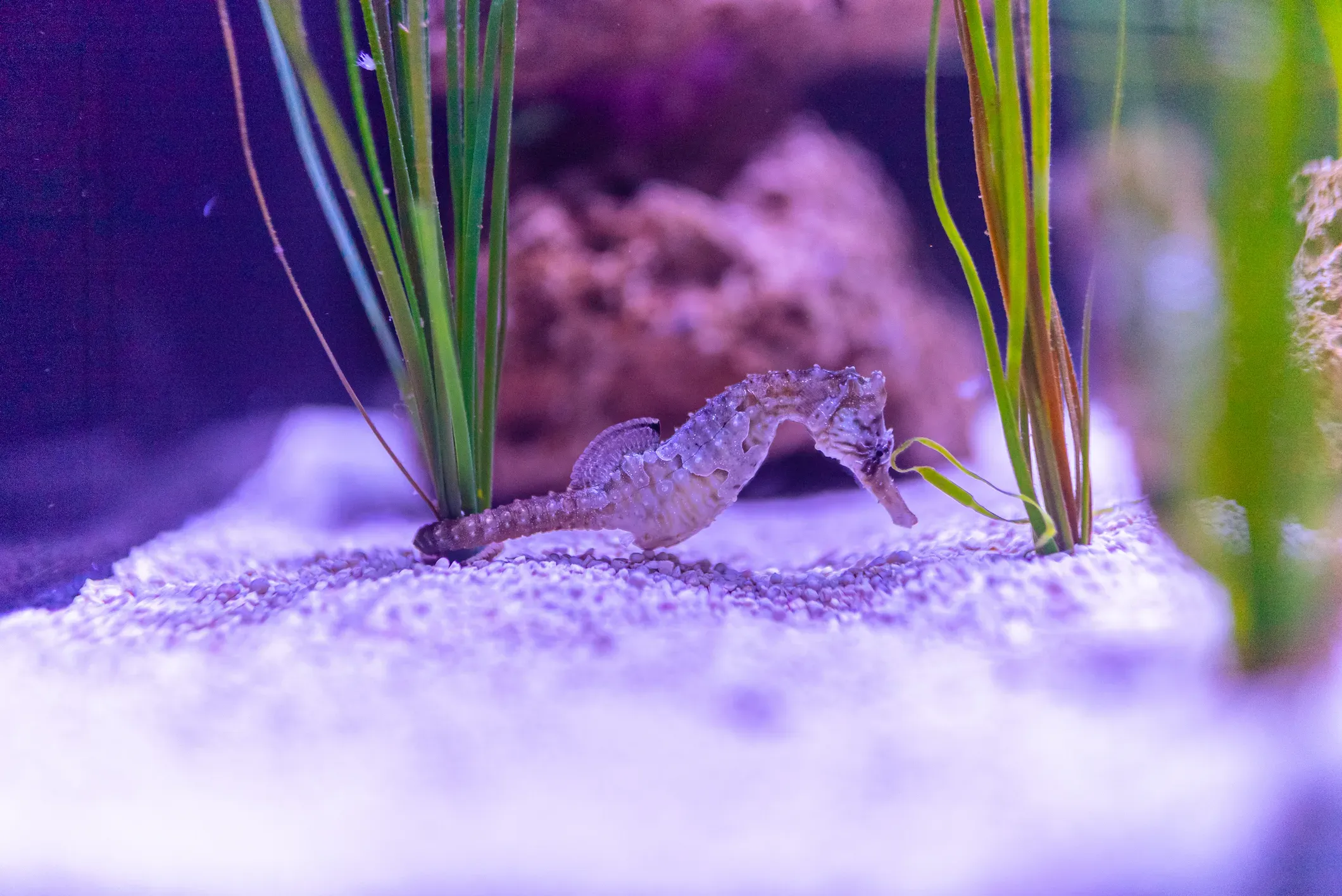
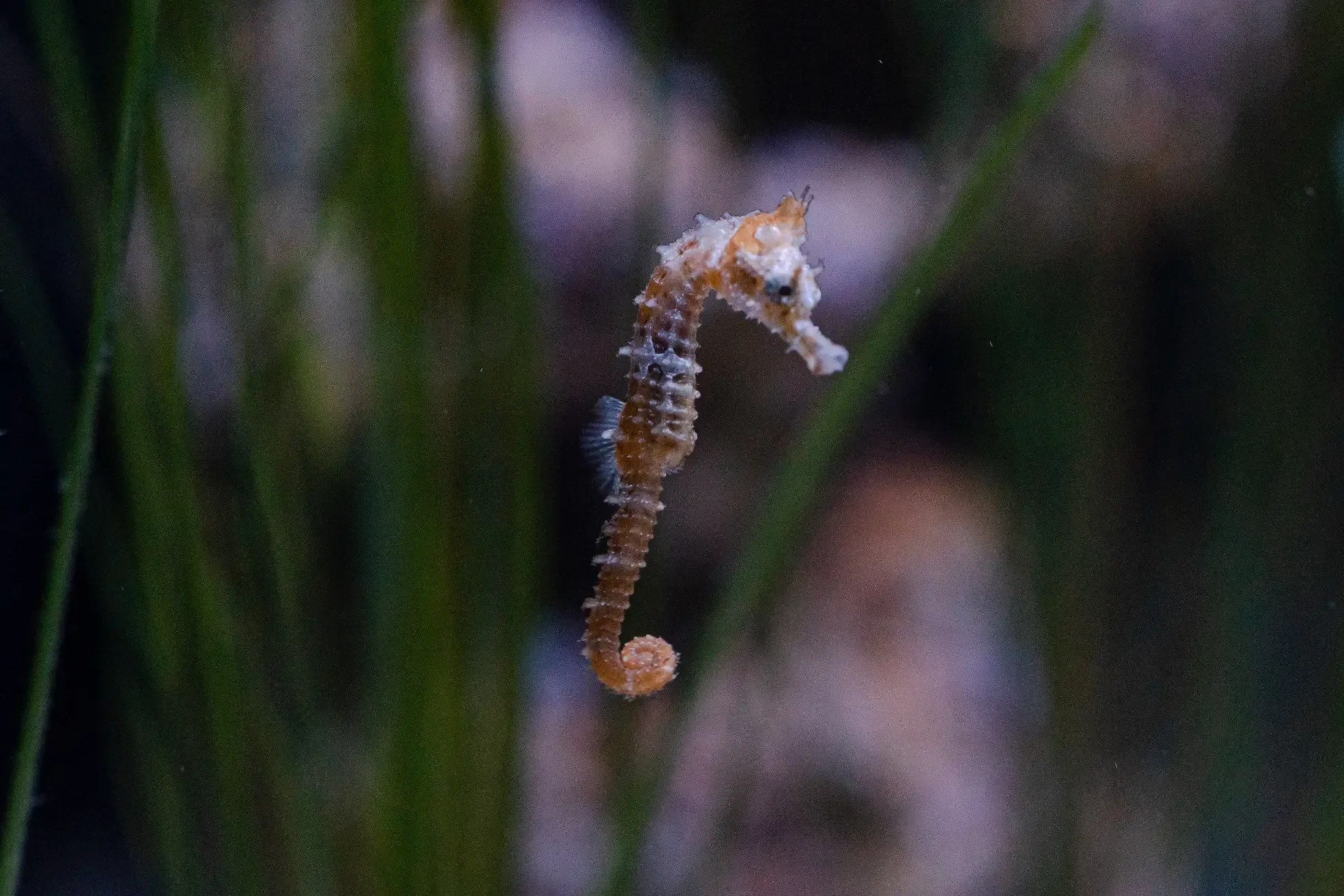
The longsnout seahorse is one of the ocean's most iconic species. Its common name comes from the distinctive horse-like shape of its head, which is joined to the rest of the body at a right angle—a unique anatomical feature among fishes. Belonging to the family Syngnathidae and the genus Hippocampus, the longsnout seahorse, also known as the slender seahorse, is recognised by its elongated snout and the series of pale, usually whitish, rings running along its body.
Geographical distribution
Found in the western Atlantic, from North Carolina (United States), Bermuda and the Bahamas south to Santa Catarina, Brazil.
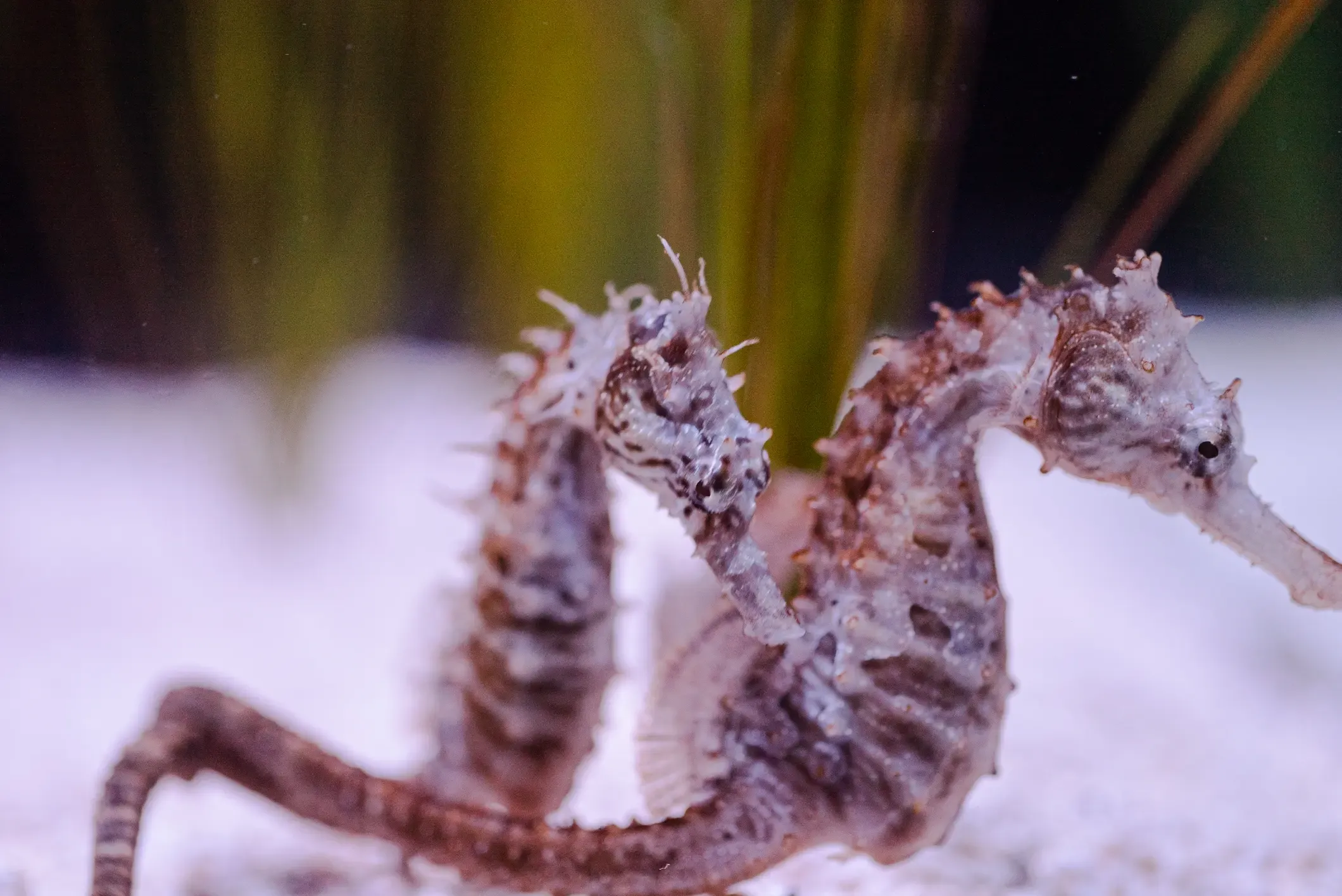
Hábitat
Lifstyle behaviour
Diet
In the wild
• Feed on small crustaceans that form part of the zooplankton.
• Capture prey by sucking it in through their pipette-shaped snout.
• Swallow prey whole, as they lack teeth.
• Consume large amounts of food because their digestive system is relatively inefficient due to the absence of pyloric caeca.
• Independently moving eyes help them accurately detect prey.
Under human care
• Require frequent feeding with live or frozen prey.
• Diet consists mainly of Artemia, mysid shrimp (Mysis) and other small crustaceans.
• Need around five feeds per day because of their rapid digestion and the absence of pyloric caeca.
• Juveniles are initially fed Artemia nauplii. As adults, they are fed mysid shrimp and Artemia, while breeding adults also receive krill as part of their diet.
Conservation status

The longsnout seahorse (Hippocampus reidi) is classified as Near Threatened (NT) on the International Union for Conservation of Nature Red List.
Since 2004, it has also been listed in Appendix II of Convention on International Trade in Endangered Species of Wild Fauna and Flora.
Main threats:
• Habitat loss, particularly affecting coral reefs and seagrass meadows.
• Bottom trawling, which causes significant damage to seabed habitats.