 Home
 Plan your visit
 Jungle
 Tropical
 Deep Ocean
 Guided Tours
 Encyclopedia
 Blog


How do amphibians breathe?
Breathing strategies and adaptations to their environment
Did you know that amphibians have a unique way of breathing that allows them to survive in different habitats? From the larval stage to adulthood, these animals show a remarkable ability to adapt, using different breathing mechanisms throughout their lives.

What are amphibians?
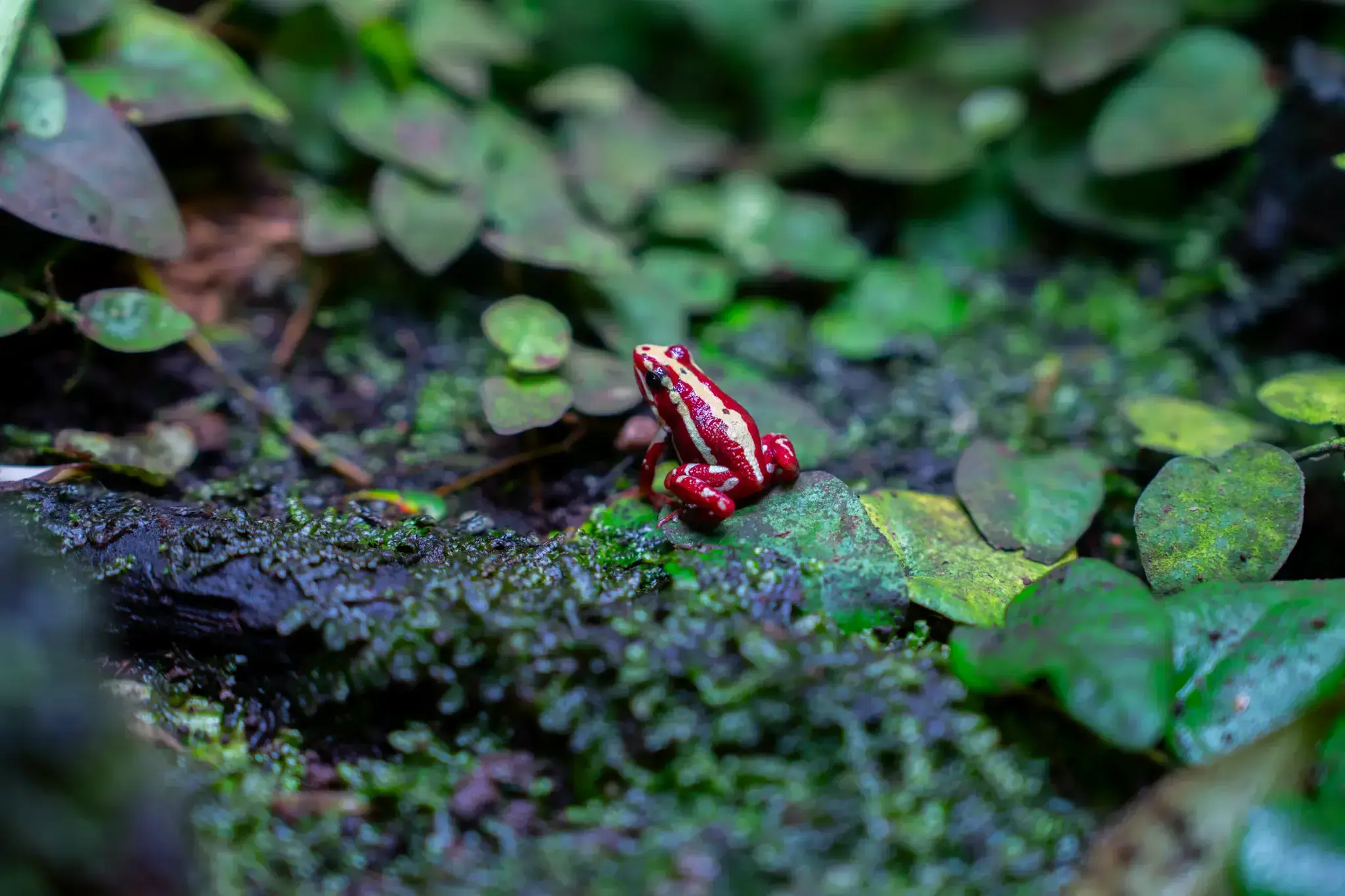
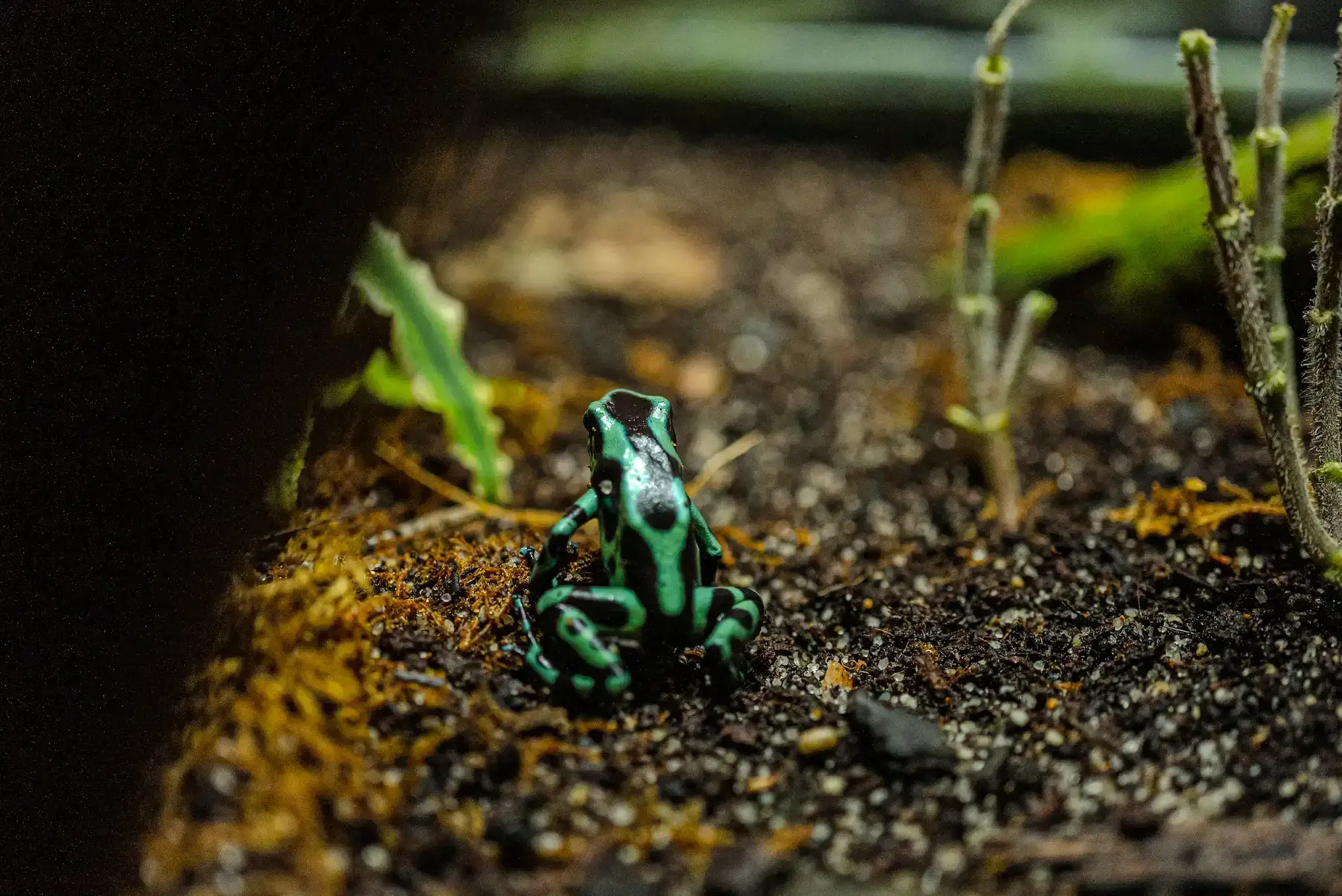
Amphibians are a group of “cold-blooded” vertebrates that includes animals such as frogs, toads, salamanders and axolotls. What makes them so special is their ability to adapt to different habitats throughout their life cycle. They are born in water as larvae, and many eventually venture onto dry land. The most remarkable and distinctive feature of this group is how their breathing mechanisms adapt as they grow, shifting from gill breathing as larvae to the lung and skin breathing typical of adults.
From gill breathing in water to lung breathing and skin breathing in adulthood, amphibians show nature’s extraordinary ability to develop highly effective adaptive solutions.
Characteristics of amphibians
These animals are ectothermic (“cold-blooded”) vertebrates, which means that their body temperature is regulated by their surroundings.
One of their most important characteristics is that they undergo fairly abrupt transformations known as metamorphosis.
They reproduce sexually and lay eggs, from which larvae hatch (such as frog tadpoles). These larvae look nothing like the adults and live in water, breathing through gills which, over time and after completing metamorphosis, turn into lungs. During this process they also develop limbs and, in some cases, lose their tail, as frogs and toads do.
Amphibian respiration: what do they breathe through?
Throughout their lives, amphibians can use several breathing strategies. The reason is simply the environment they live in, which is very different before and after metamorphosis, although they always remain tied to water or damp conditions.
During their larval stage, amphibians are aquatic animals that live in freshwater habitats such as ponds, lagoons, lakes or clean rivers.
After metamorphosis, the vast majority of amphibians become land animals. Some constantly move in and out of the water to stay moist, while others remain in the water at all times.
There are therefore 4 types of breathing in amphibians:
- Gill breathing.
- The buccopharyngeal cavity mechanism.
- Cutaneous breathing (through the skin).
- Lung breathing.

How do amphibians breathe?
The way these animals breathe can change from one stage of their life to the next, and there are some differences between species.
1. Breathing through gills
During the larval stage, amphibians breathe through gills located on both sides of the head. In anurans (frogs and toads), these gills are usually enclosed in a gill chamber, while in urodeles, such as salamanders, they remain exposed.
2. Buccopharyngeal breathing
Salamanders and some adult frogs have buccopharyngeal membranes inside their mouths that act as respiratory surfaces.
In this type of breathing, the amphibian takes in air and holds it in its mouth while these membranes, which are highly permeable to oxygen and carbon dioxide, carry out gas exchange without the air needing to reach the lungs. It is a strategy that complements lung breathing.
3. Cutaneous breathing
One of the most remarkable characteristics of amphibians is their ability to carry out gas exchange through their skin. This is essential throughout the animal’s life, especially when it is underwater or at rest.
For this strategy to work, their skin must stay moist and be permeable to oxygen. This is why amphibians are closely tied to damp environments and are affected by pollution, habitat loss and global warming, which alters water quality and the availability of damp shelters.
4. Lung breathing
After metamorphosis, many amphibians develop simple lungs, which allow them to “swallow” air from the atmosphere. However, these lungs are not as efficient as those of other groups, such as mammals.
Unlike us mammals, amphibians do not use a diaphragm to ventilate their lungs. Instead, they pump air through a mechanism known as buccal pumping, using their throat muscles to push air into their lungs.

Amphibian breathing: a testament to evolution
The breathing strategies of amphibians are among the most fascinating adaptations in nature.
From gill breathing, which allows them to extract oxygen underwater, to the lung and skin breathing they use on land, amphibians show the incredible versatility of life. Their evolutionary journey, marked by metamorphosis, is proof of nature’s ingenuity in developing survival strategies.
Would you like to find out more about these animals? Come and visit Poema del Mar or explore our website.