 Home
 Plan your visit
 Jungle
 Tropical
 Guided Tours
 Encyclopedia
 Blog


Yellow-banded Poison Frog
Dendrobates leucomelas
Family: Dendrobatidae | Genus: Dendrobates
Tropical rainforest | Carnivorous | Diurnal | South America | Up to 3.8 cm | Up to 10–15 years
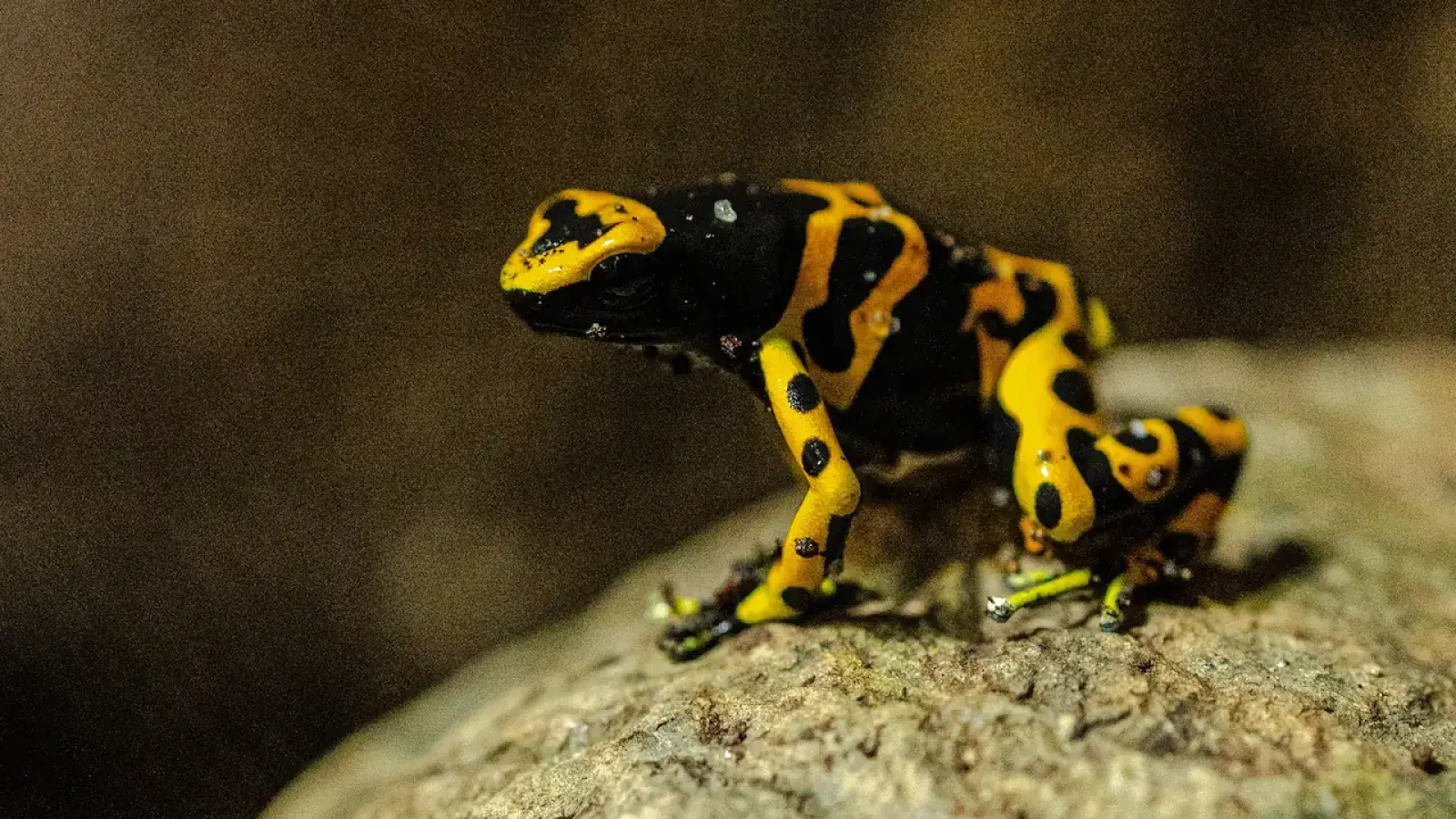
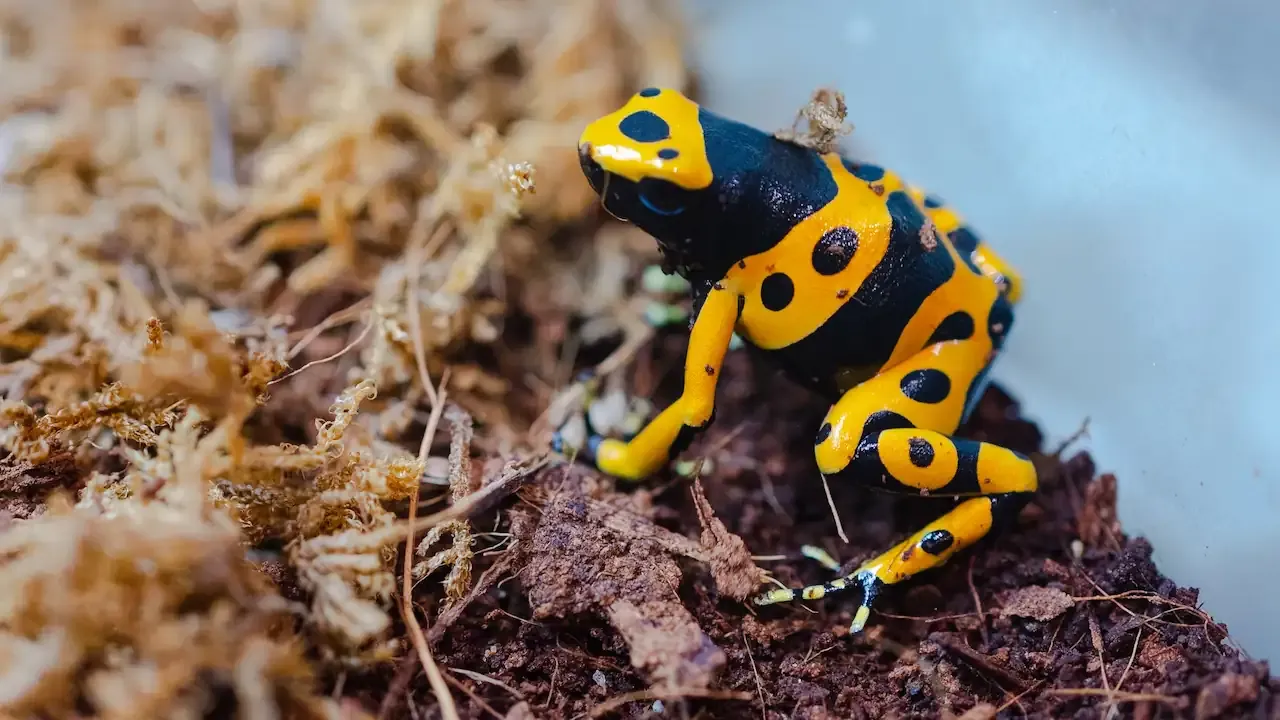
The Yellow-banded Poison Frog (Dendrobates leucomelas), also known as the yellow-banded poison dart frog, is a small species native to the rainforests of South America. With its striking yellow-and-blackpattern and toxicity, it's one of the best-known members of the poison dart frog family. It grows up to 3.8 cm long and weighs around 3 g.
Its bold yellow-and-black bands serve as a clear warning to predators. Interestingly, the frog isn't toxic by nature — it picks up its toxins from its diet, mainly from ants.
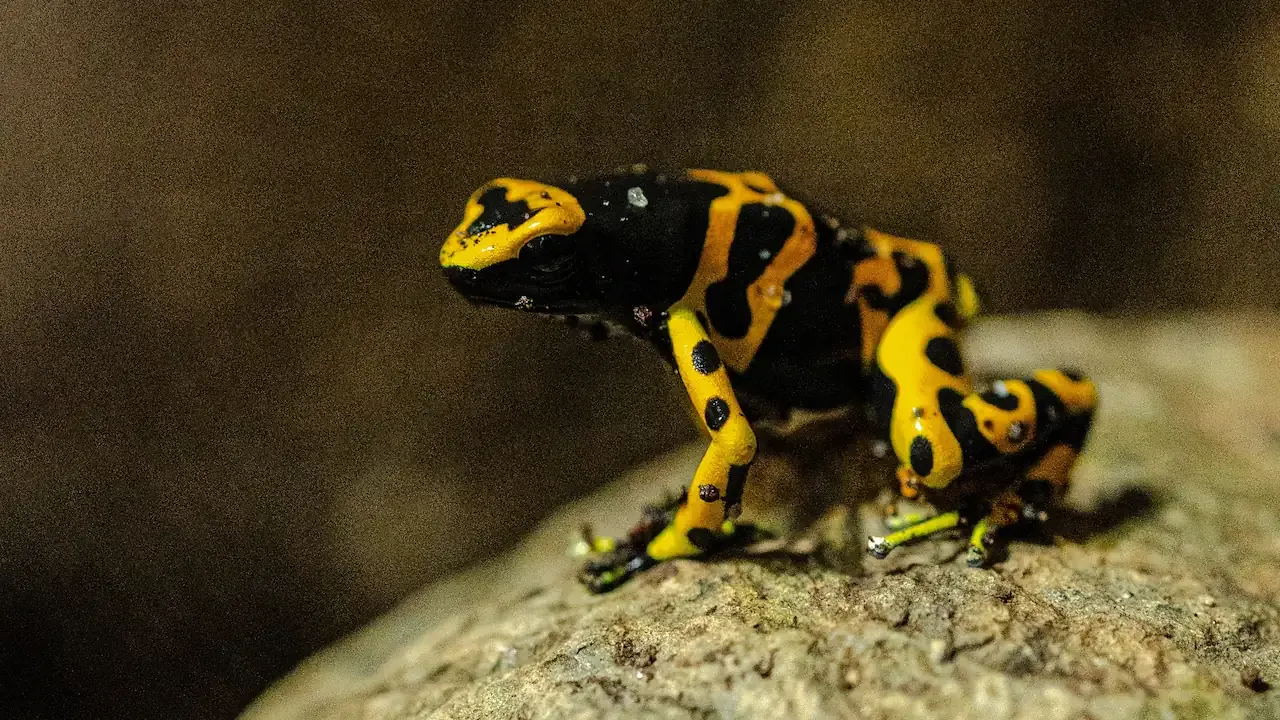
Small adhesive pads on its toes let it climb effortlessly and grip securely even on vertical surfaces. It's also the only known poison dart frog species to enter a period of dormancy during the dry season.
Geographical distribution
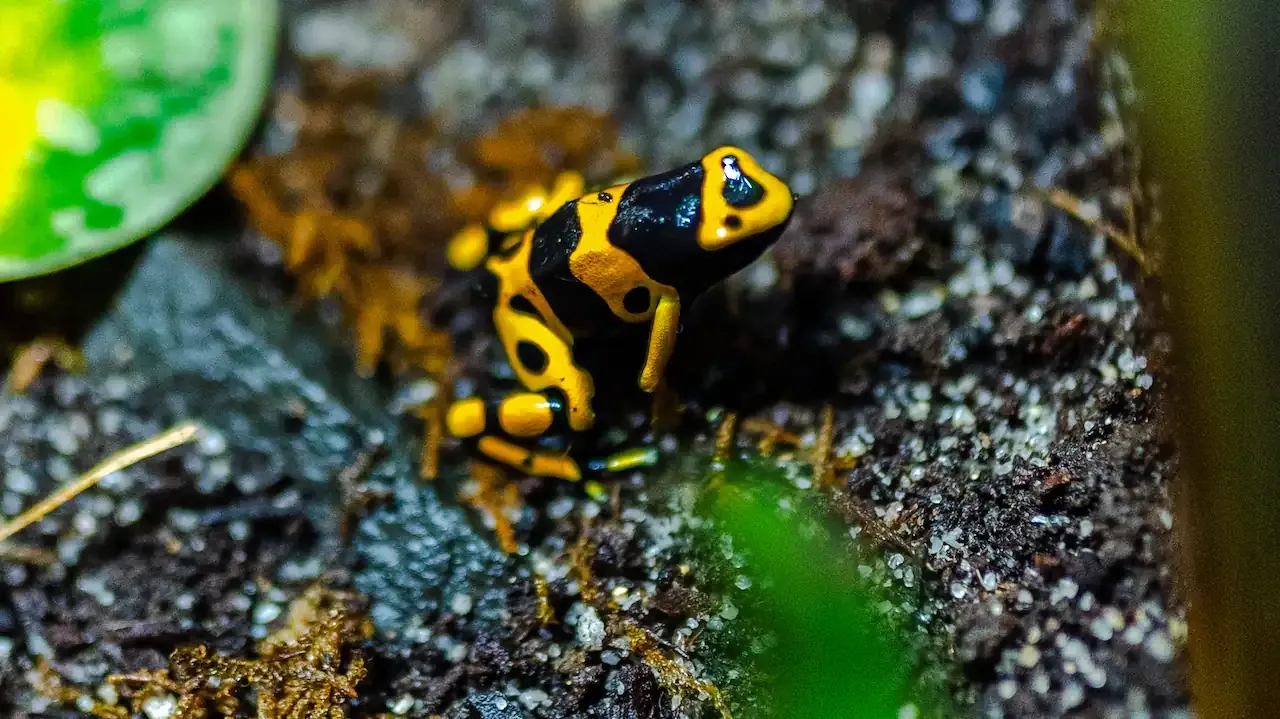
The Yellow-banded Poison Frogis native to the Guiananpart of the Orinoco basin in Venezuela. From there, itsrangeextendsnorth to the Orinoco, eastthrough Guyana to the Essequibo River, southinto the farnorth of Brazil, and west intoeasternAmazonian Colombia. It'sfoundexclusively in humidtropicalrainforest — the onlyenvironmentthat meets itsneeds.
 Habitat
Lifestyle and behavior
Diet
In the wild
- Insects, especially ants, fruit flies, and crickets.
Under human care
- Small, non-toxic insects such as fruit flies and small crickets.
- Without access to toxic prey, animals under human care don't develop toxicity.
Conservation status

Related species at Poema del Mar

Green and black poison frog
