Home
 Plan your visit
 Jungle
 Tropical
 Guided Tours
 Encyclopedia
 Blog


Tube Anemone
Cerianthus membranaceus
Family: Cerianthidae | Genus: Cerianthus

Marine environments | Carnivorous and planktivorous | Atlantic Ocean and Mediterranean Sea
Tube anemones are remarkable marine engineers, constructing a permanent refuge in the form of a mucus-lined tube buried within the seabed. Unlike typical sea anemones, which attach themselves to rocks, tube anemones spend their entire lives inside these self-built tubes. The tube is formed from specialised mucus secretions that harden on contact with seawater and can extend up to one metre beneath the sediment surface. Only their elegant tentacles remain visible above the seabed.
Tube anemones possess cnidocytes—specialised stinging cells found both on their tentacles and within the tube—which play a vital role in defence and in immobilising prey. They are widely distributed throughout the eastern Atlantic and the Mediterranean Sea and, because they do not rely on sunlight, they are able to thrive in permanently dark marine environments. When threatened, they can retract completely into their tube within a fraction of a second, disappearing instantly beneath the seabed.
Geographical distribution
Atlantic–Mediterranean distribution. In the Mediterranean Sea, the species has been recorded along the northern coastline, including the coasts of Spain, France, Italy, the Croatian Adriatic and the Aegean Sea, as well as from Port Said (Egypt) through the Dardanelles and the Sea of Marmara.


 Habitat
Lifestyle and behaviour
Diet
Natural habitat
-
Opportunistic suspension-feeding carnivores.
-
They feed primarily on plankton, including both zooplankton and phytoplankton.
-
They capture small crustaceans (such as larvae) and occasionally fish larvae.
-
They also consume suspended particulate organic matter.
Under human care
-
A varied diet consisting of mysis shrimp, enriched brine shrimp (Artemia), and krill.
-
Target feeding close to the tentacles three times per week.
-
Requires moderate water flow to facilitate prey capture.
Conservation status
Related species
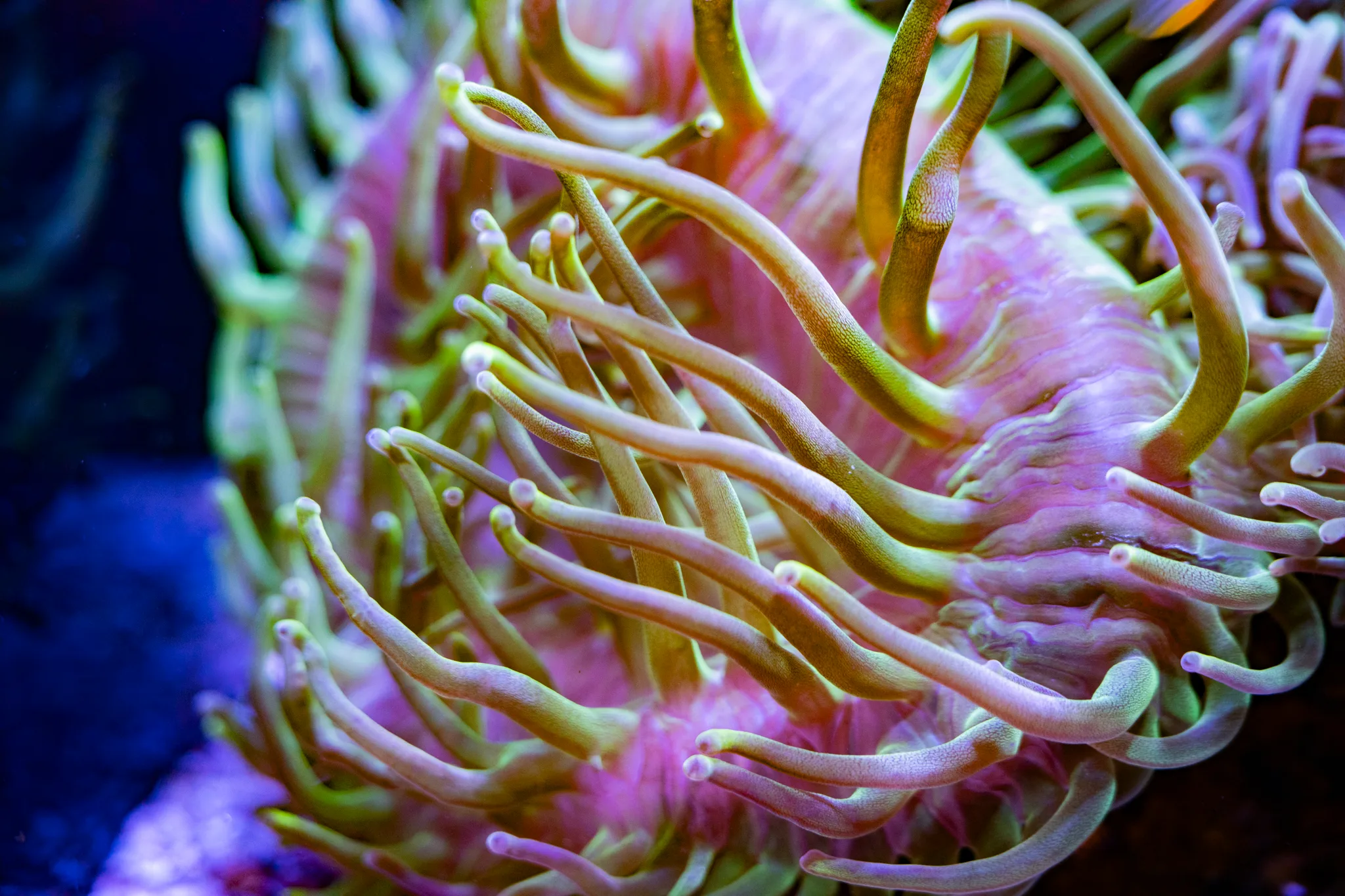
Magnificent sea anemone
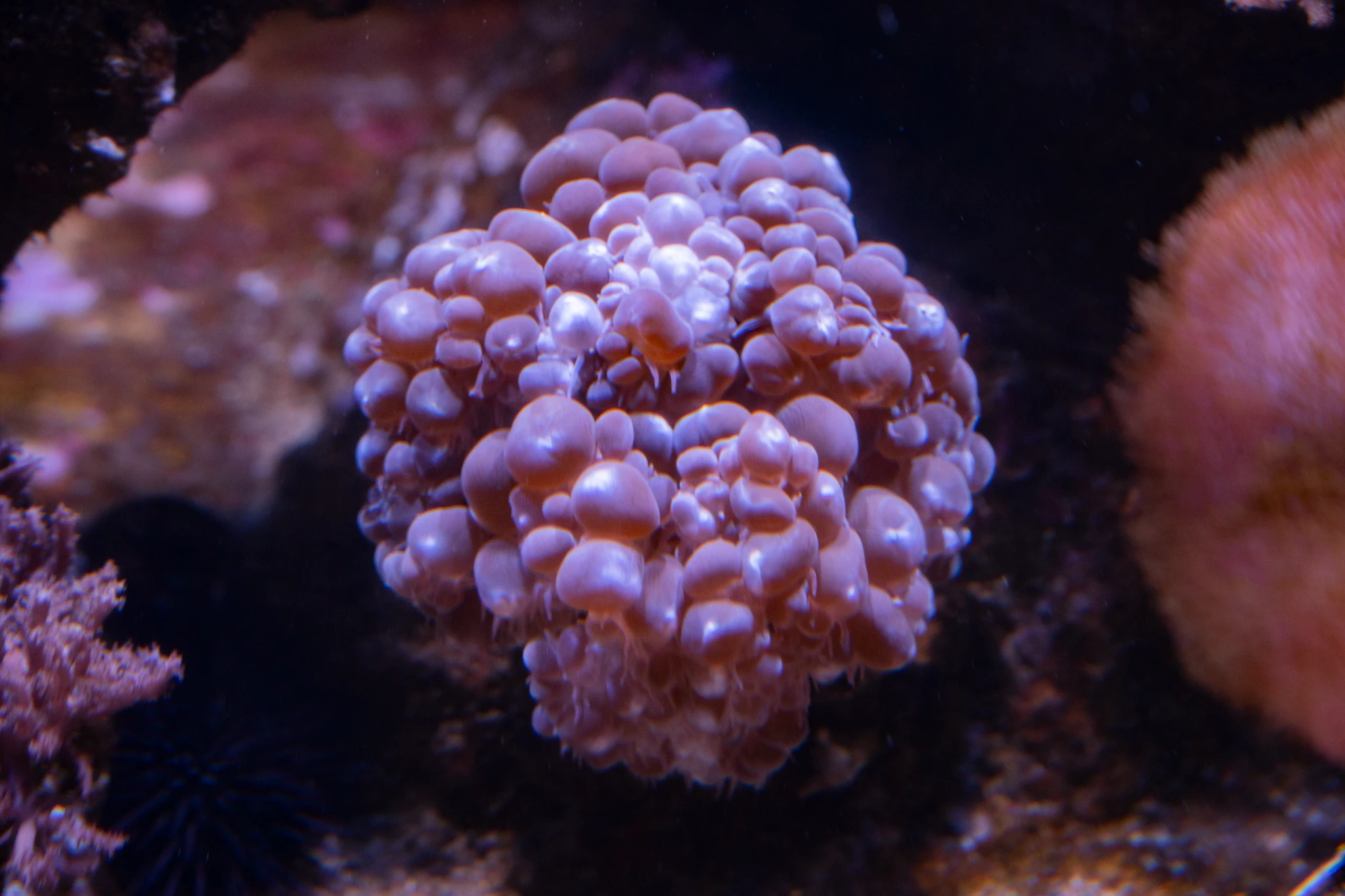
Bubble-tip anemone