Horseshoe Crab
Limulus polyphemus
Family: Limulidae | Genus: Limulus
Coastal waters and estuaries | Omnivore | Western Atlantic | up to 60 cm | up to 40 years
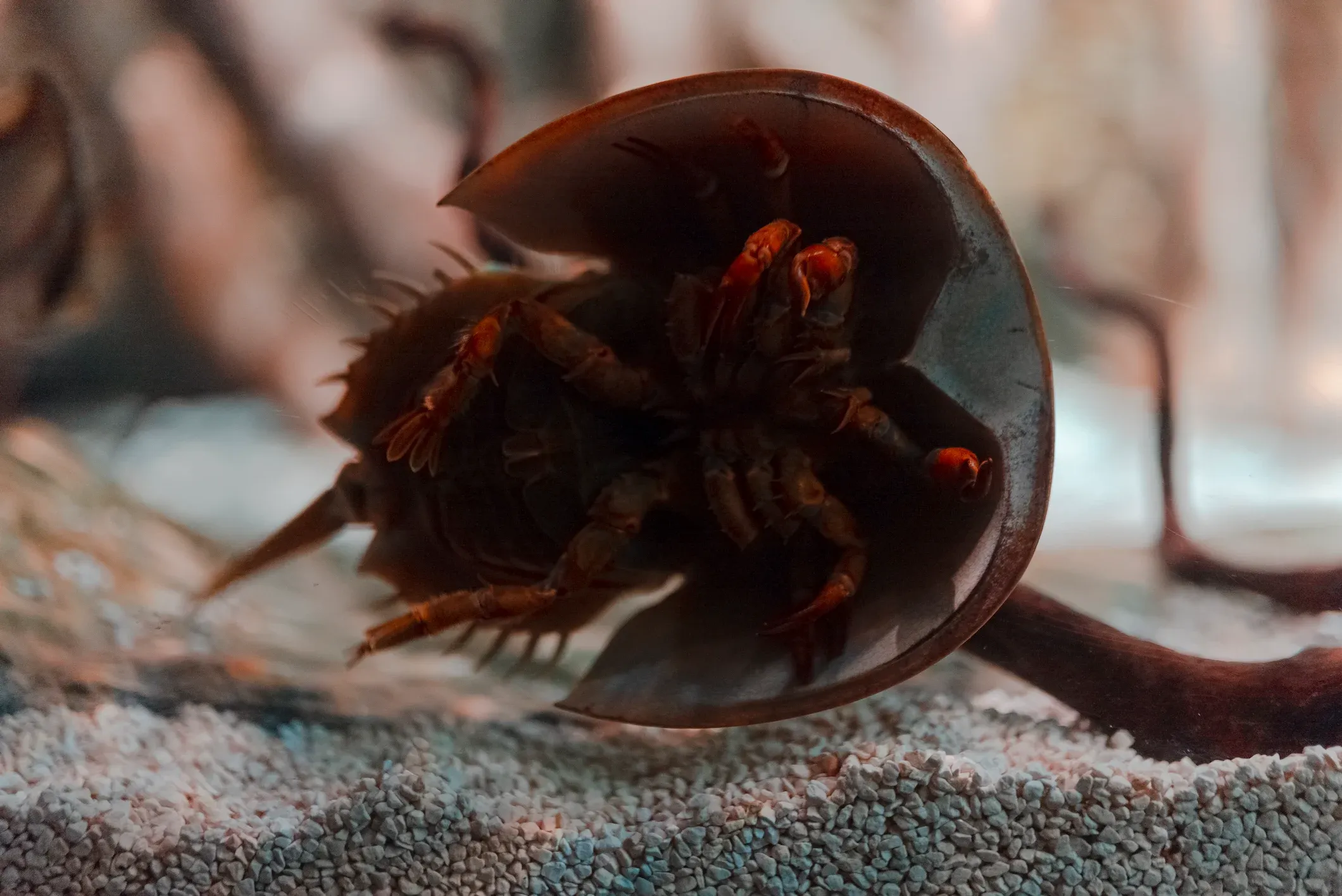
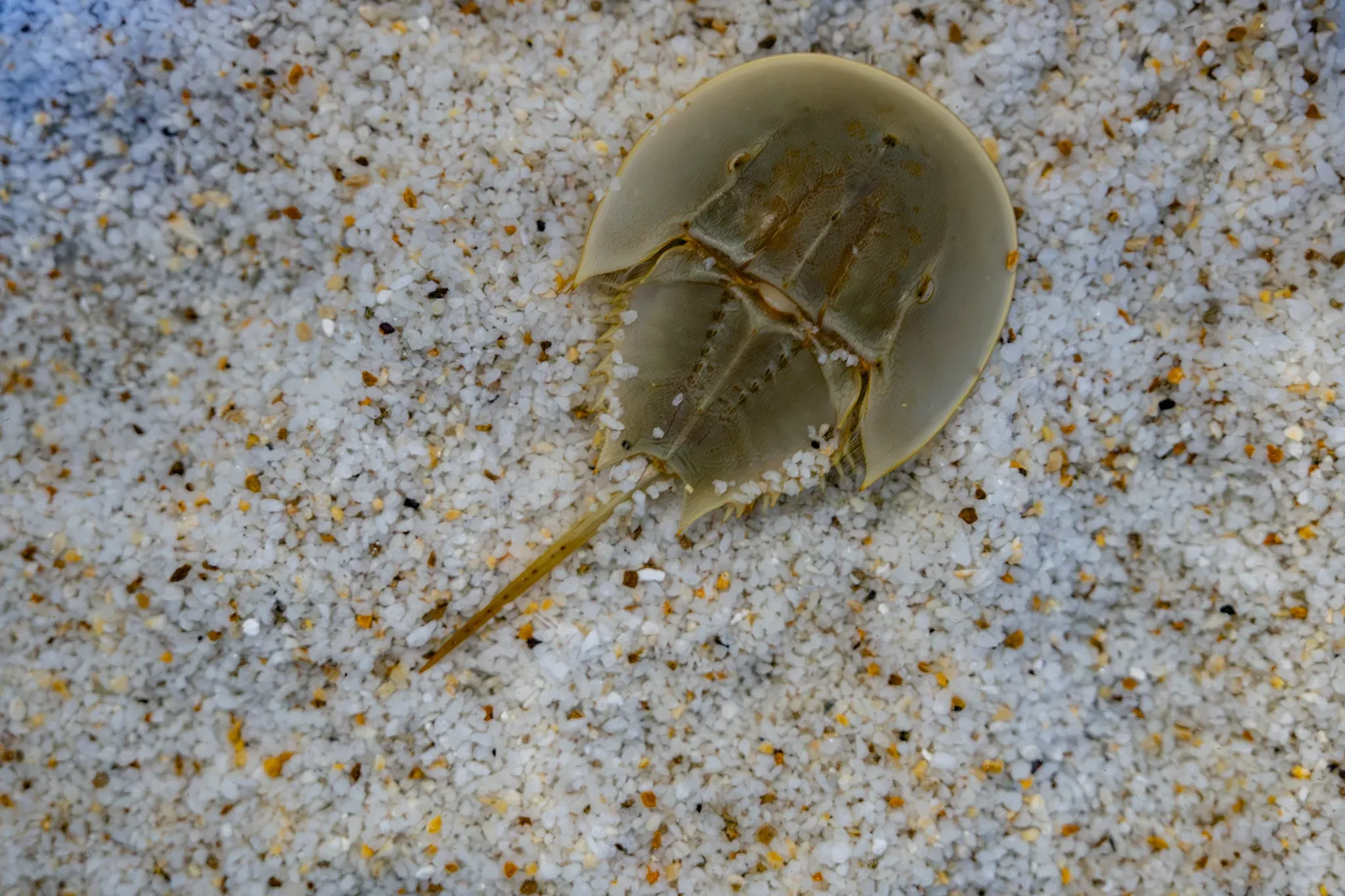
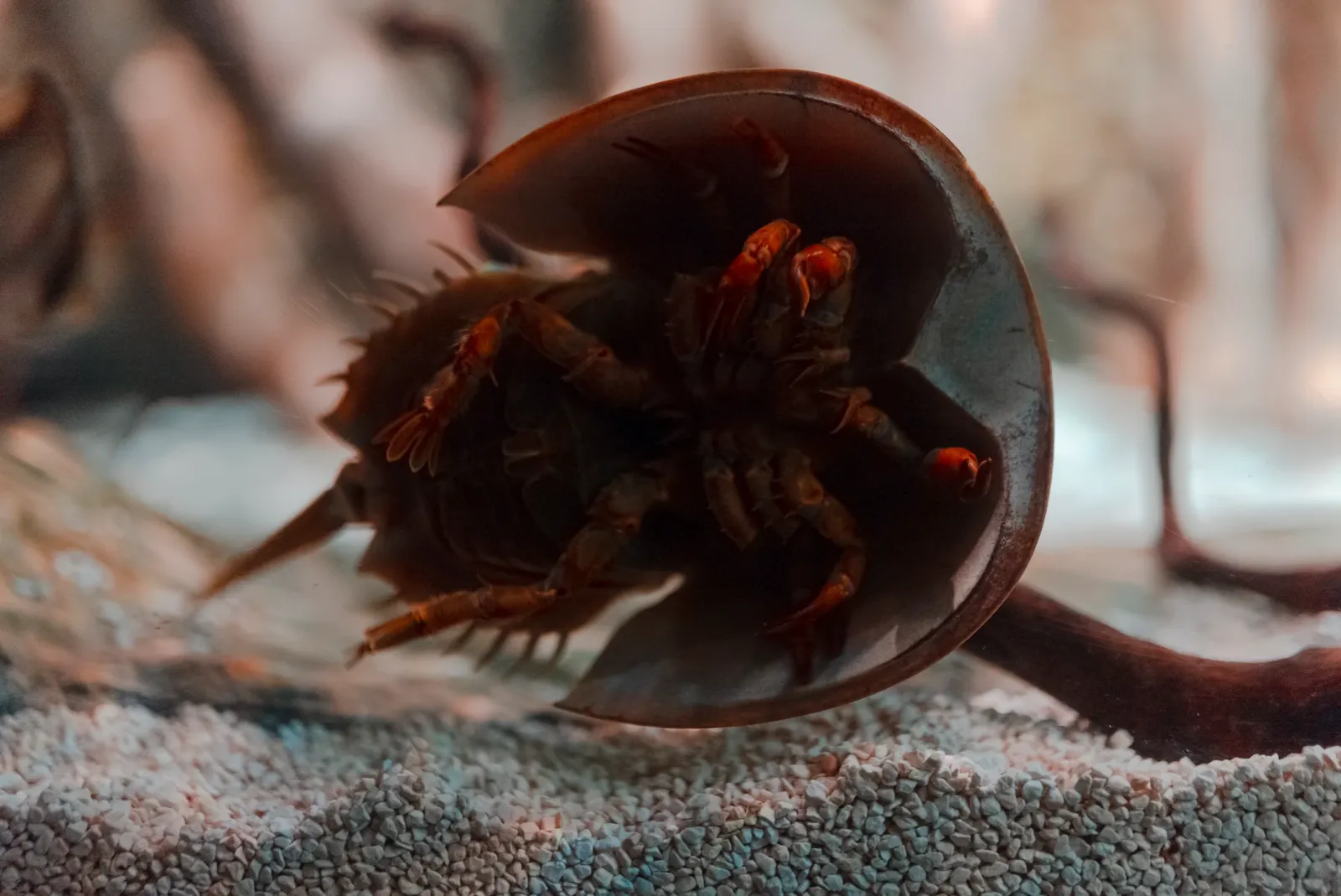
The horseshoe crab is a true living fossil and one of the oldest surviving species on Earth, with a history stretching back around 450 million years. Despite its name, it is more closely related to arachnids, such as spiders and scorpions, than to true crabs. This chelicerate is easily recognised by its horseshoe-shaped shell, its long tail spine (known as the telson) and its distinctive blue blood, which has unique biomedical properties of exceptional value. It inhabits coastal waters and estuaries, where it plays an essential ecological role.
Geographical distribution
Western Atlantic: from Maine (United States) to Mexico.
Hábitat
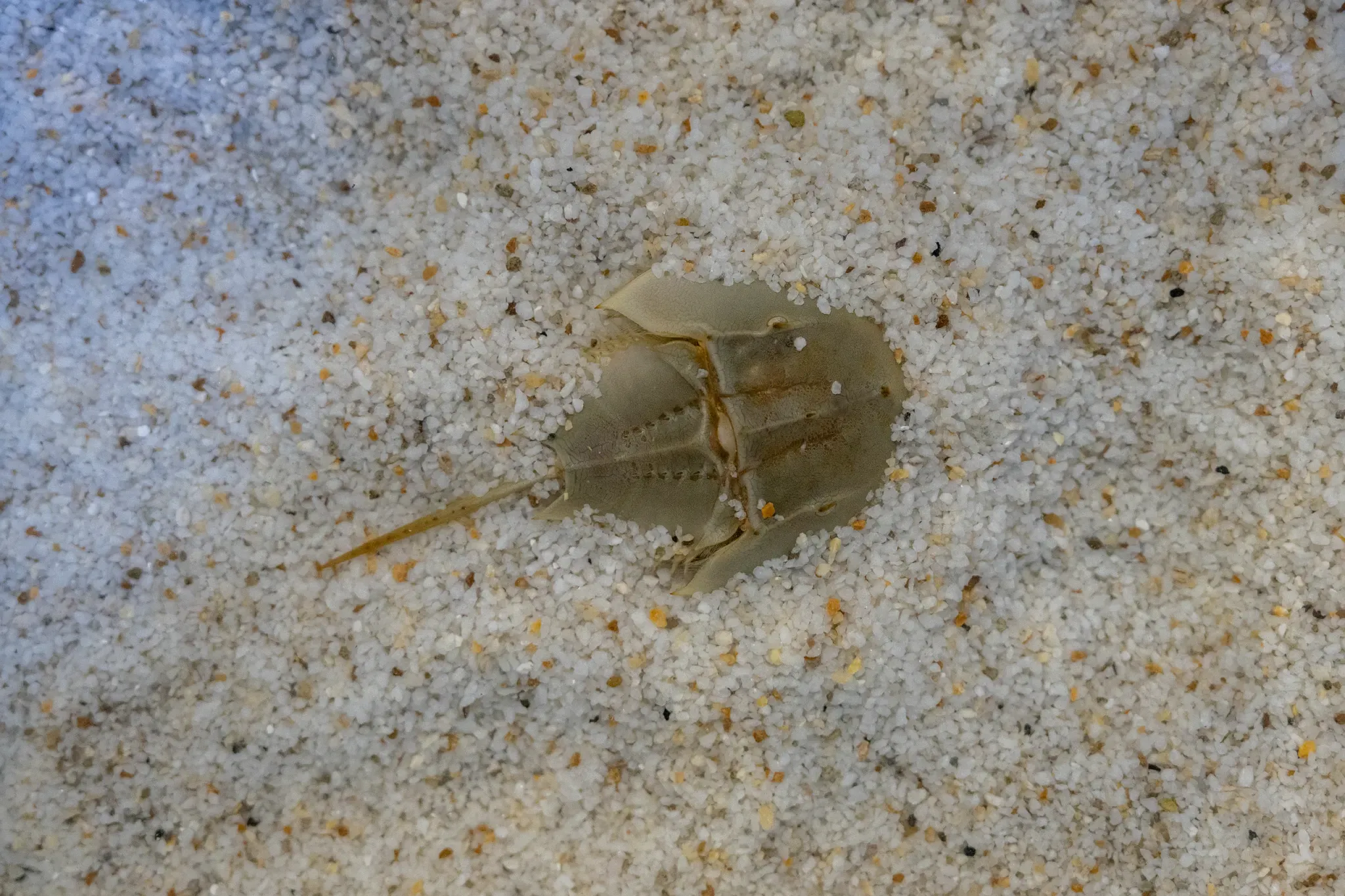
It inhabits rocky and sandy seabeds at depths ranging from 3 to 11 metres. During spring and summer, adults move onto sandy beaches to spawn.
Habitat description: It prefers ecosystems characterised by:
• Shallow sandy and muddy seabeds.
• Sheltered coastal waters and estuaries.
• Sandy beaches used for breeding during spring and summer.
• Temperate waters of the western Atlantic.
• Depths between 3 and 11 metres.
Lifestyle and behaviour
Horseshoe crabs are generally solitary or found in small groups, although they gather in large numbers during the breeding season. They live on shallow seabeds, where they partially bury themselves in the substrate while searching for food. Their body plan has remained remarkably unchanged for millions of years, preserving many ancestral characteristics.
Social behaviour
• Usually solitary or found in small groups.
• Form large aggregations during the spawning season.
• Migrate seasonally to sandy beaches for reproduction.
Daily activity
• Partially bury themselves in the substrate while feeding.
• Use the telson to assist with feeding activities while buried.
• Move using six pairs of specialised legs.
Reproduction
• Males are approximately one-third the size of females.
• Oviparous species with seasonal reproduction; during the nesting season (spring and summer), adults move onto beaches to spawn.
• Females bury themselves in the sand and lay clusters containing between 2,000 and 20,000 eggs.
• Males fertilise the eggs externally.
Relationship with their environment
• Primitive body structure: They lack antennae and jaws, possessing instead a pair of ventral chelicerae and six pairs of specialised legs.
• Use of the telson (tail): The telson is not used as a weapon or for defence. Instead, it assists with feeding while the animal is buried and helps it right itself if overturned.
• Natural predators: Include the loggerhead sea turtle, pufferfish, leopard shark and gulls.
• Essential ecological role: Their eggs provide a crucial food source for migratory shorebirds.
Diet
In the wild
• Omnivorous species.
• Feed while partially buried in the substrate.
• Diet consists mainly of polychaete worms, bivalve molluscs and gastropods, together with algae and organic matter.
• Crush food using the spiny bases of their legs while walking.
Under human care
• Varied diet, generally provided as a nutritionally balanced gel enriched with marine invertebrates.
• Food includes prawns, molluscs and algae, with quantities adjusted according to the size and needs of each individual.
• A sandy substrate is essential to allow natural foraging and feeding behaviour.
• Fed three times per week.
Conservation status
The horseshoe crab (Limulus polyphemus) is classified as Vulnerable (VU) on the International Union for Conservation of Nature Red List.
Main threats:
• Biomedical harvesting: Hundreds of thousands of individuals are collected each year so that a small volume of their blue blood can be sampled. Their blood contains amebocytes, cells used to detect bacterial contamination in medicines and medical devices. After the procedure, the animals are returned to the wild, although some may experience temporary physiological stress.
• Climate change: Rising sea levels and changes to coastal ecosystems are affecting breeding habitats.
• Habitat loss: Caused by coastal development and the alteration of spawning beaches.
• Harvest for bait: Individuals are collected for use as bait in commercial fisheries.