Home
 Plan your visit
 Jungle
 Tropical
 Deep Ocean
 Guided Tours
 Encyclopedia
 Blog


Banggai cardinalfish
Pterapogon kauderni
Familia: Apogonidae | Género: Pterapogon
Marine waters | Carnivorous and planktivorous | Reefs and seagrass meadows | Western Pacific | Up to 8.6 cm | Up to 6 years
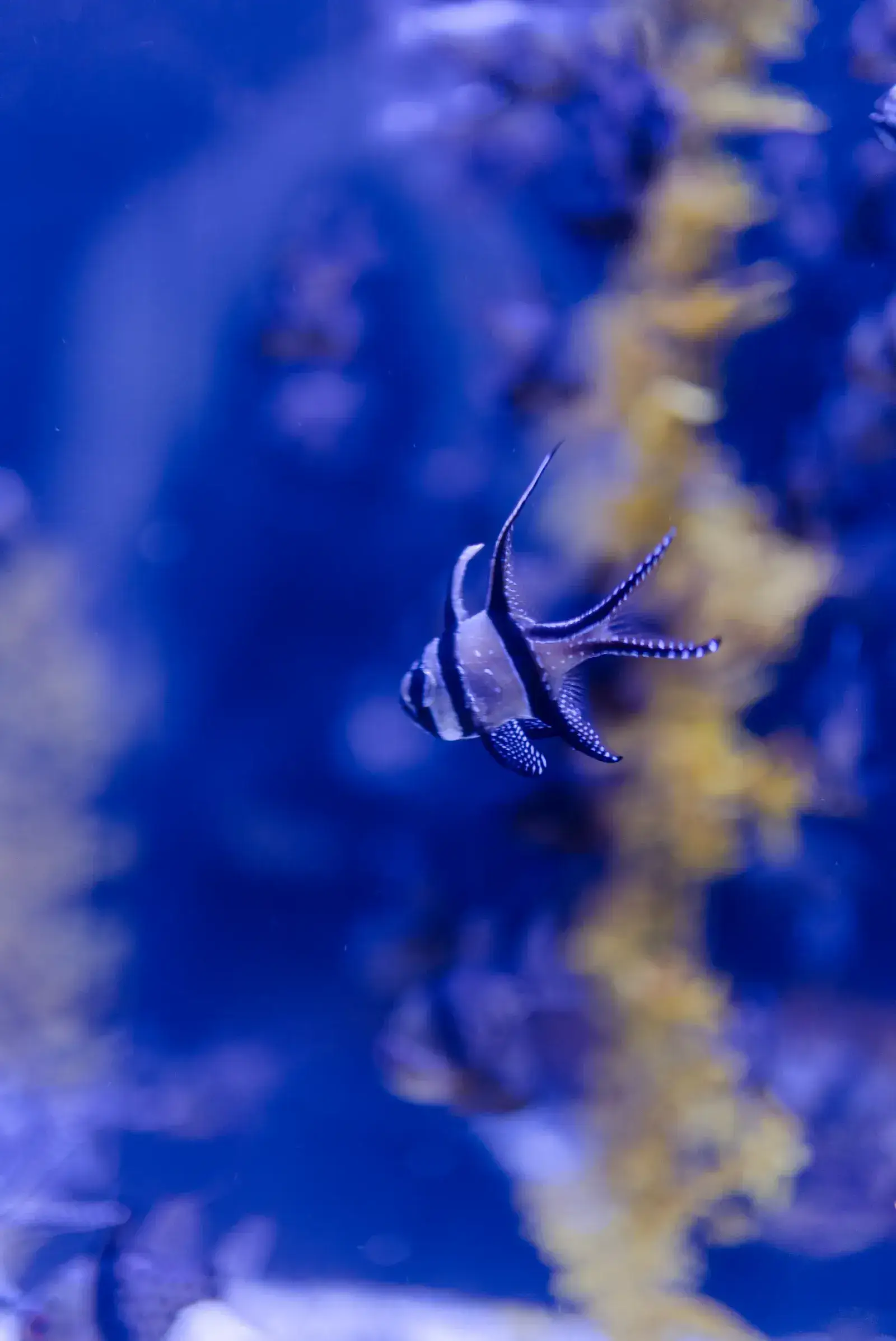
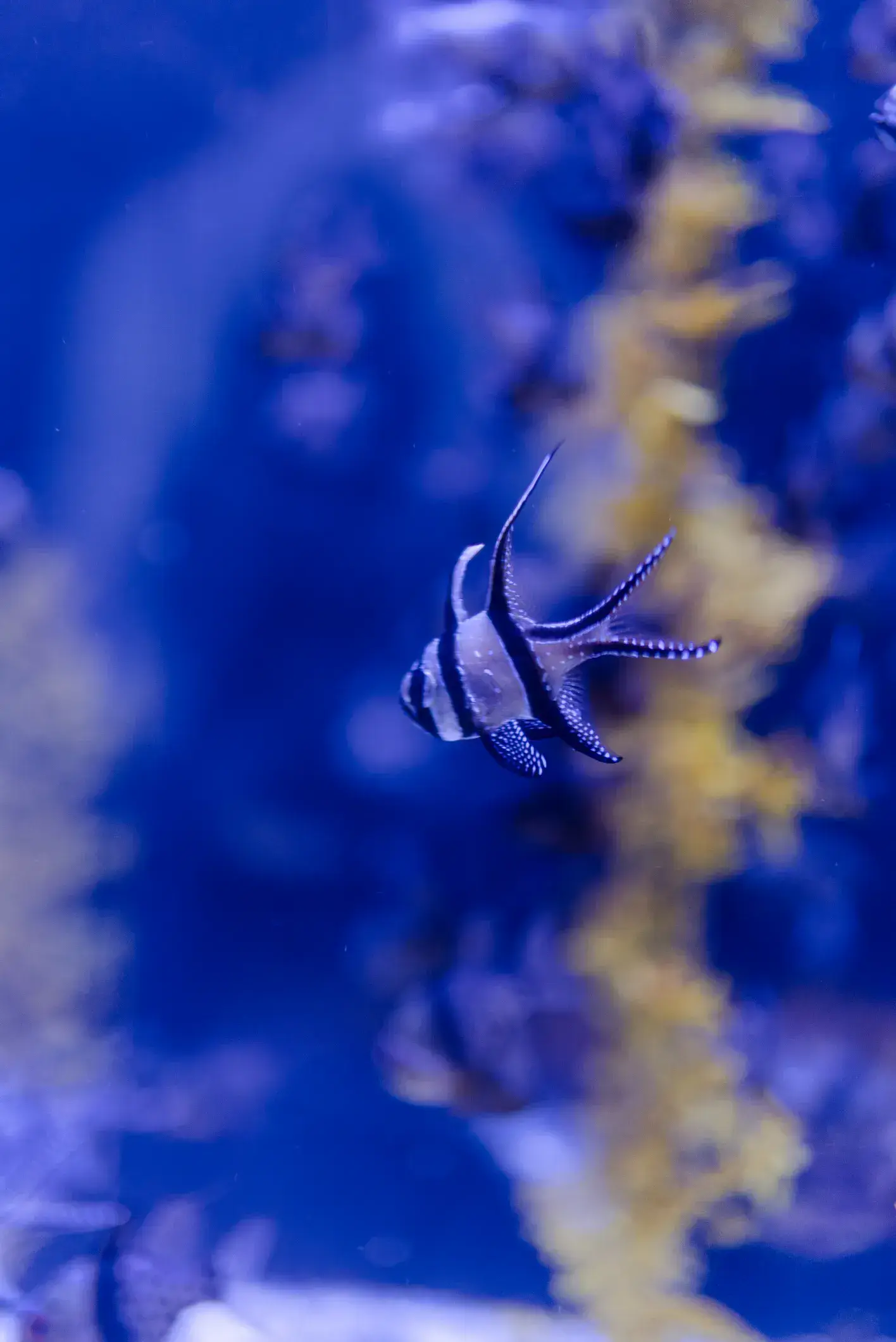
The Banggai cardinalfish (Pterapogon kauderni) is an iconic species of the Western Pacific reefs, native to the Banggai Archipelago in Indonesia. It usually measures around 5 cm, although it can reach 8.6 cm. It stands out for its elegant silvery colouring, crossed by bold vertical black bands and dotted with bright white spots.
Beyond its beauty, it has some remarkable ecological and reproductive adaptations. It lives in calm, shallow waters, where it forms small groups around Diadema sea urchins and sea anemones, which offer it shelter from predators. Its breeding strategy is particularly unusual: the male broods the eggs in his mouth until he releases fully formed juveniles. It is also the only species in its genus (Pterapogon), which gives it considerable evolutionary value and makes its conservation all the more important.
Geographical distribution
The Banggai cardinalfish is an endemic species of the Western Pacific with an extremely limited range: it appears to be restricted to the Banggai Islands in Indonesia. It is also found on several small islands east of Taliabu Island and around Luwuk.
Habitat
Lifestyle and behaviour
Diet
Natural habitat:
- It is carnivorous and planktivorous.
- It feeds mainly on small benthic crustaceans living on the seabed and planktonic crustaceans in the water column.
- It feeds mostly at night.
- It forages close to its sea urchin and anemone shelters.
Under Human Care:
- Its diet is based on crustaceans such as enriched brine shrimp (Artemia), mysis and copepods.
- It is supplemented with specially formulated pellets and flakes that meet the species’ nutritional needs.
- Prey must be small enough to suit its tiny mouth.
Conservation status

El pez cardenal de Banggai (Pterapogon kauderni) está catalogado como En Peligro (EN) en la Lista Roja de la Unión Internacional para la Conservación de la Naturaleza (UICN).
Amenazas principales:
- Distribución extremadamente limitada: al ser endémico de las islas Banggai, con un área de distribución total de unos 5500 km², cualquier amenaza local puede afectar a toda la especie.
- Ausencia de fase larvaria planctónica: la falta de dispersión larvaria impide que recolonice de forma natural las zonas donde ha desaparecido y limita la recuperación de sus poblaciones.
- Degradación del hábitat: la destrucción de praderas marinas, la contaminación y el desarrollo costero reducen sus áreas de cría.
Especies relacionadas

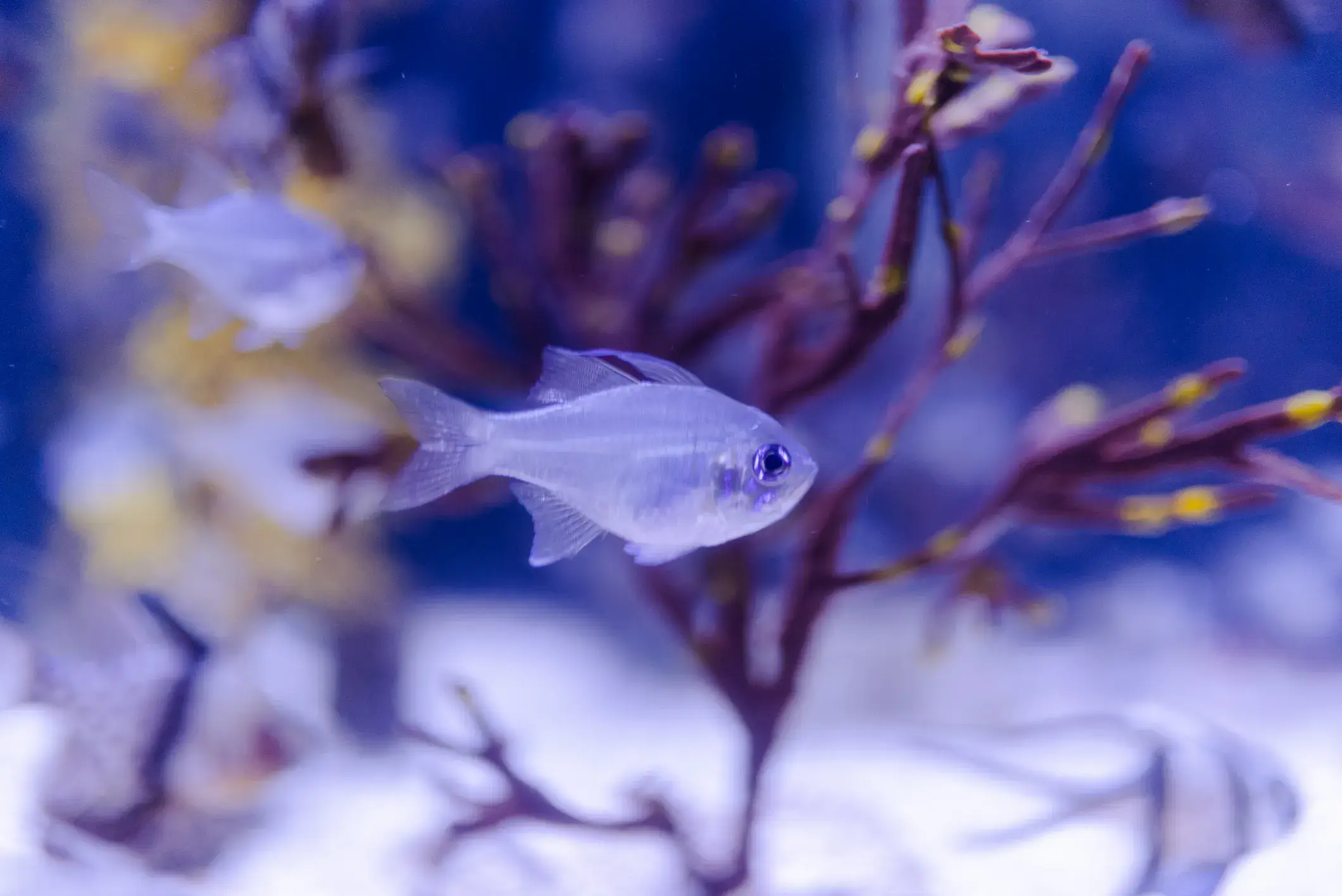
Pez cardenal de raya azul (Zoramia leptacantha)