Discus fish
Symphysodon aequifasciatus
Family: Cichlidae | Genus: Symphysodon
Freshwater | Carnivore | Amazon River and tributaries | South America | Up to 13,5 cm
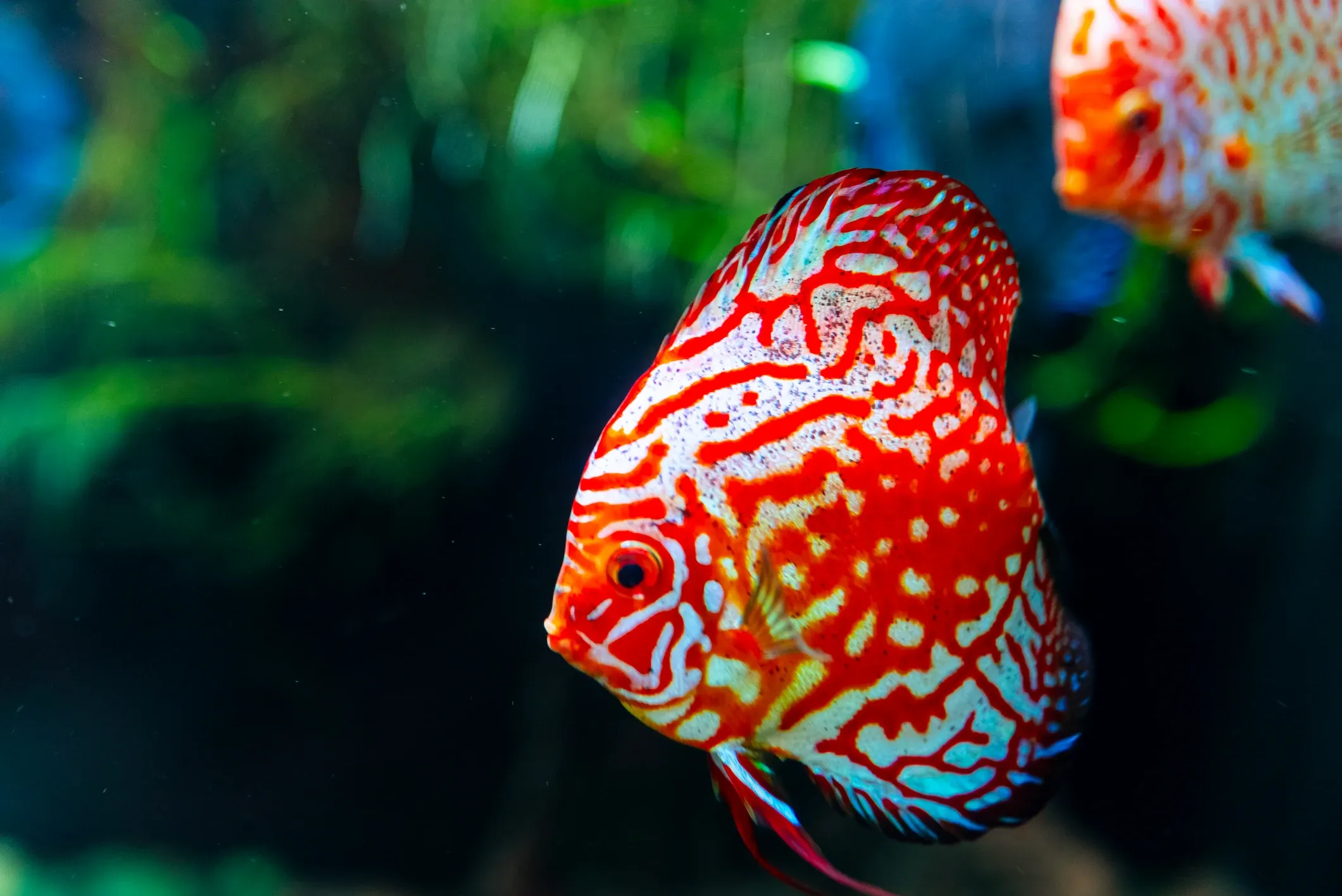
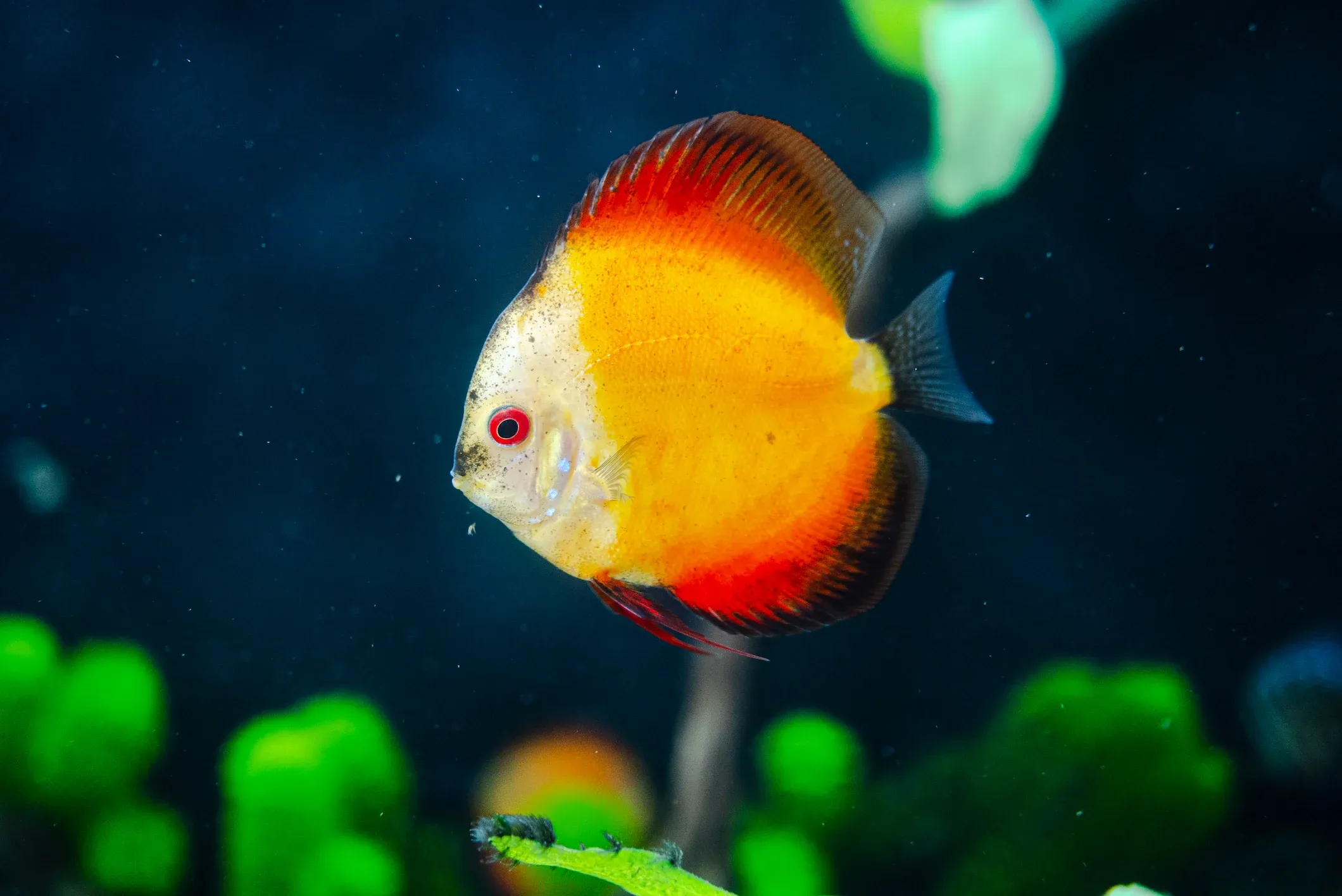
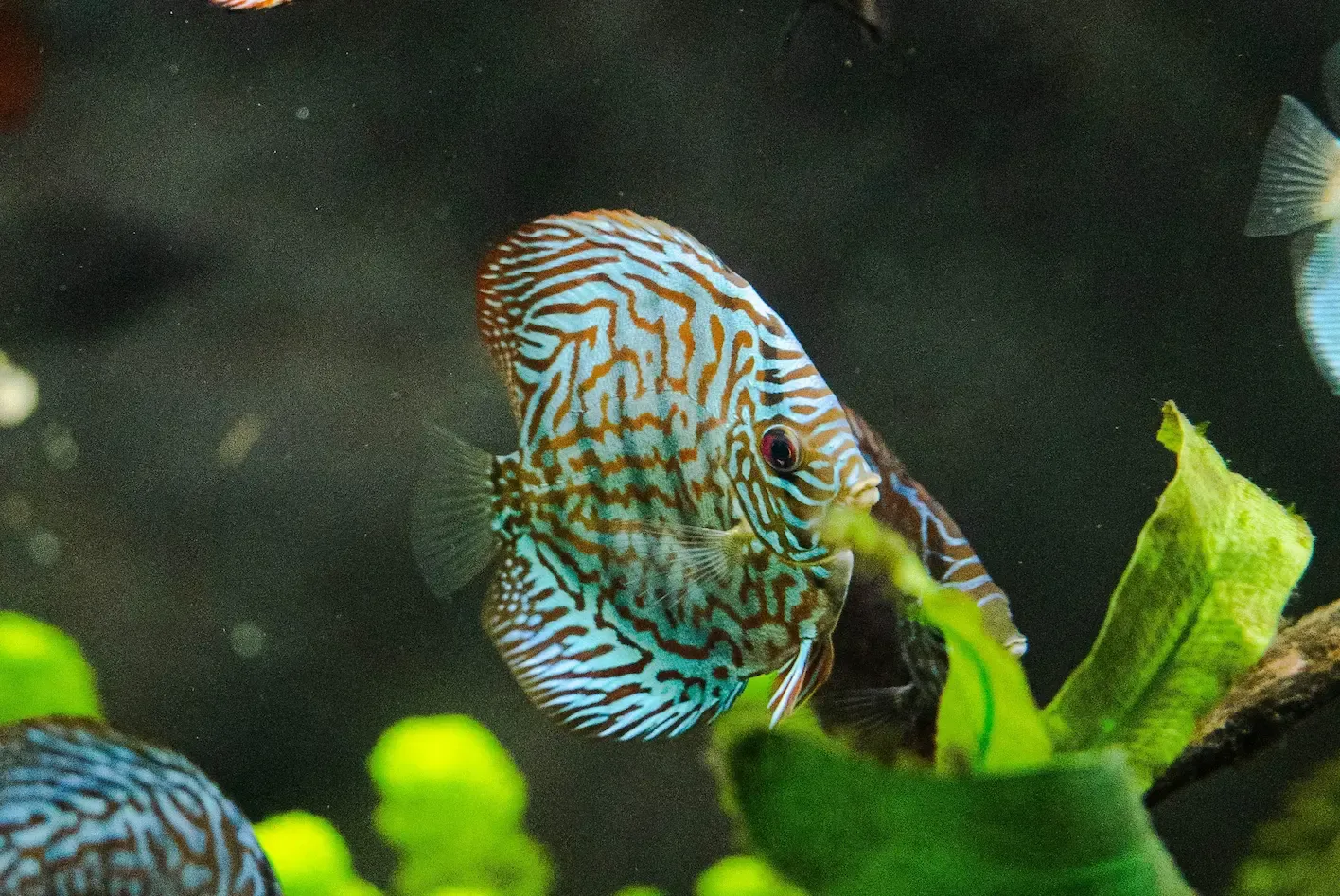
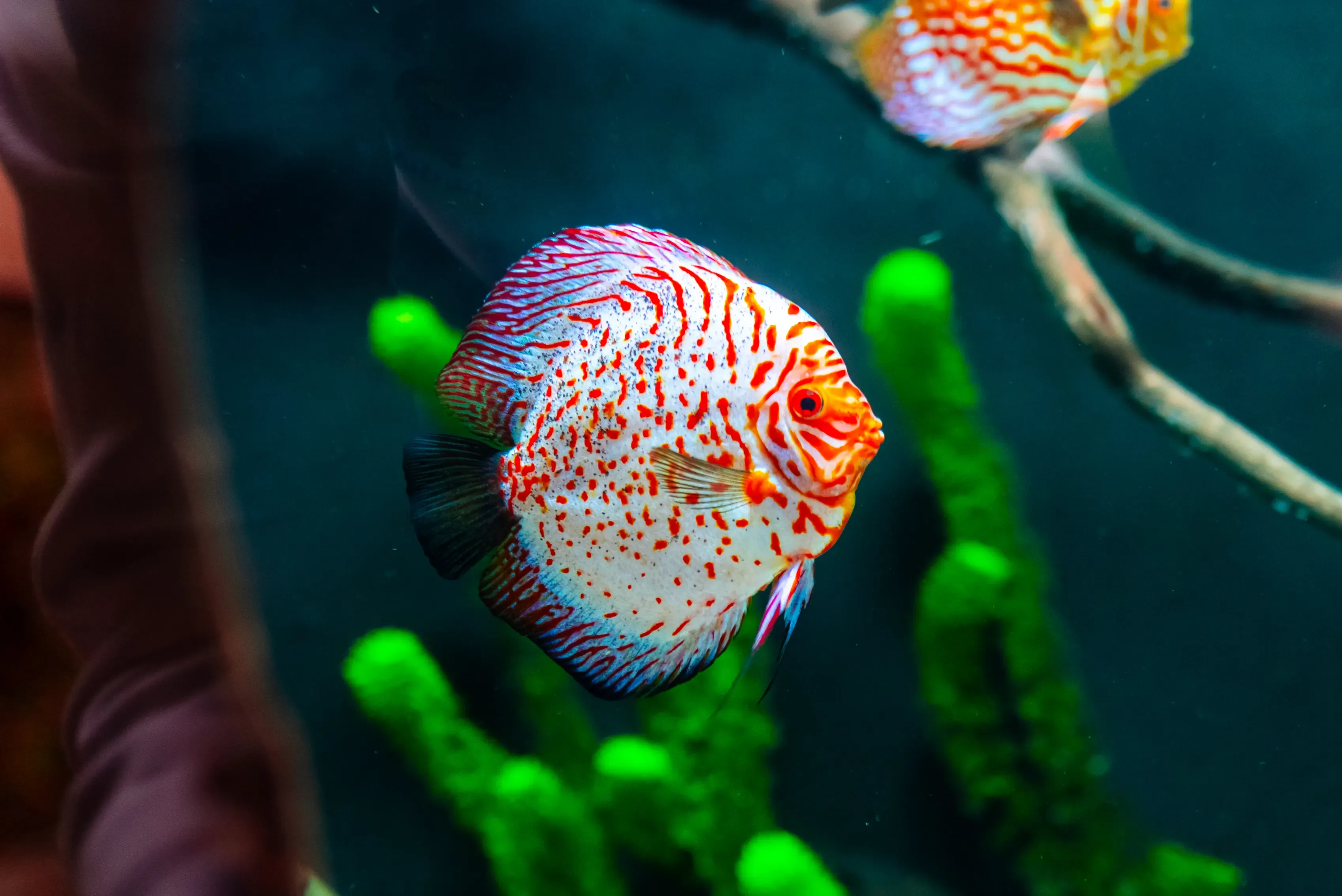
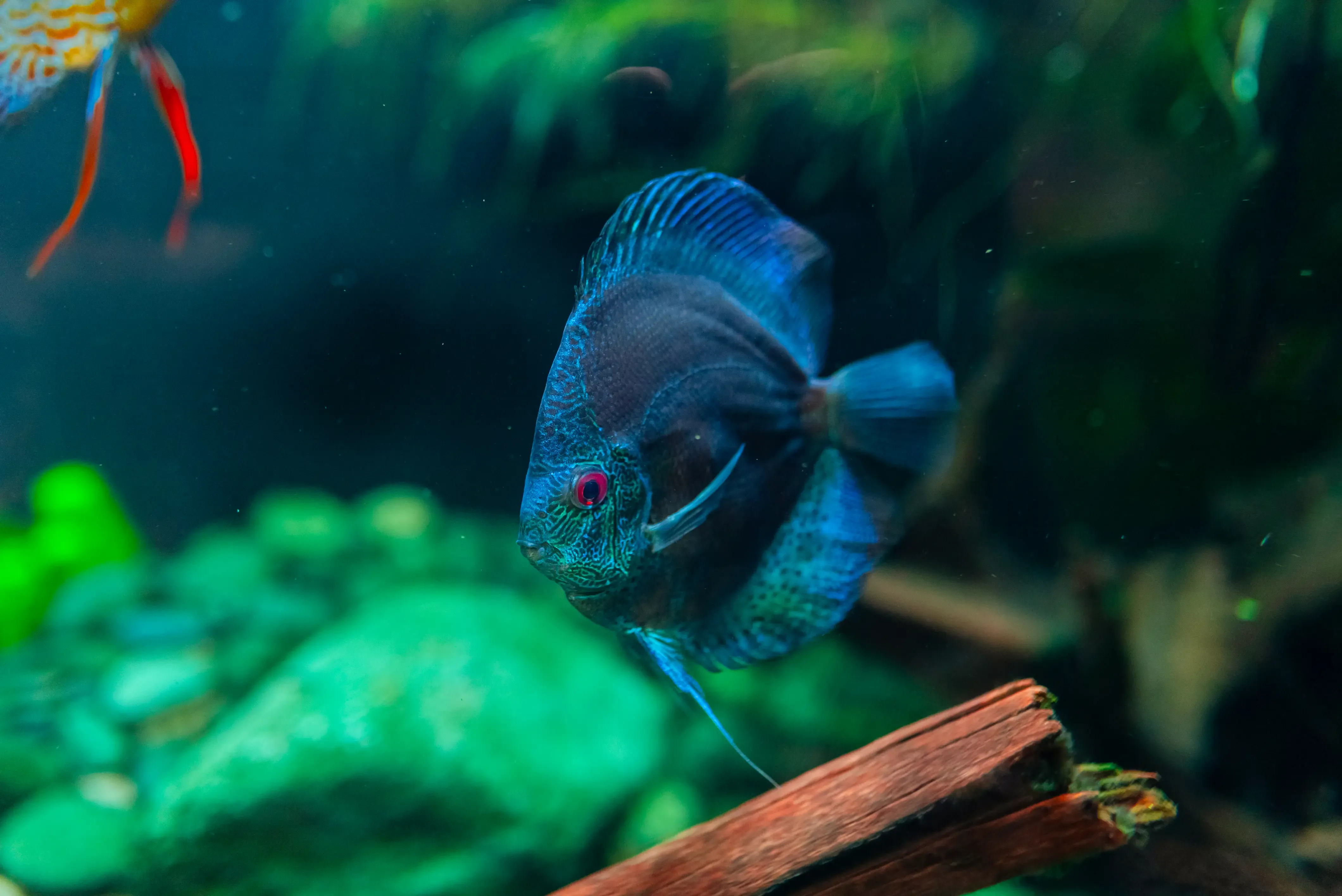
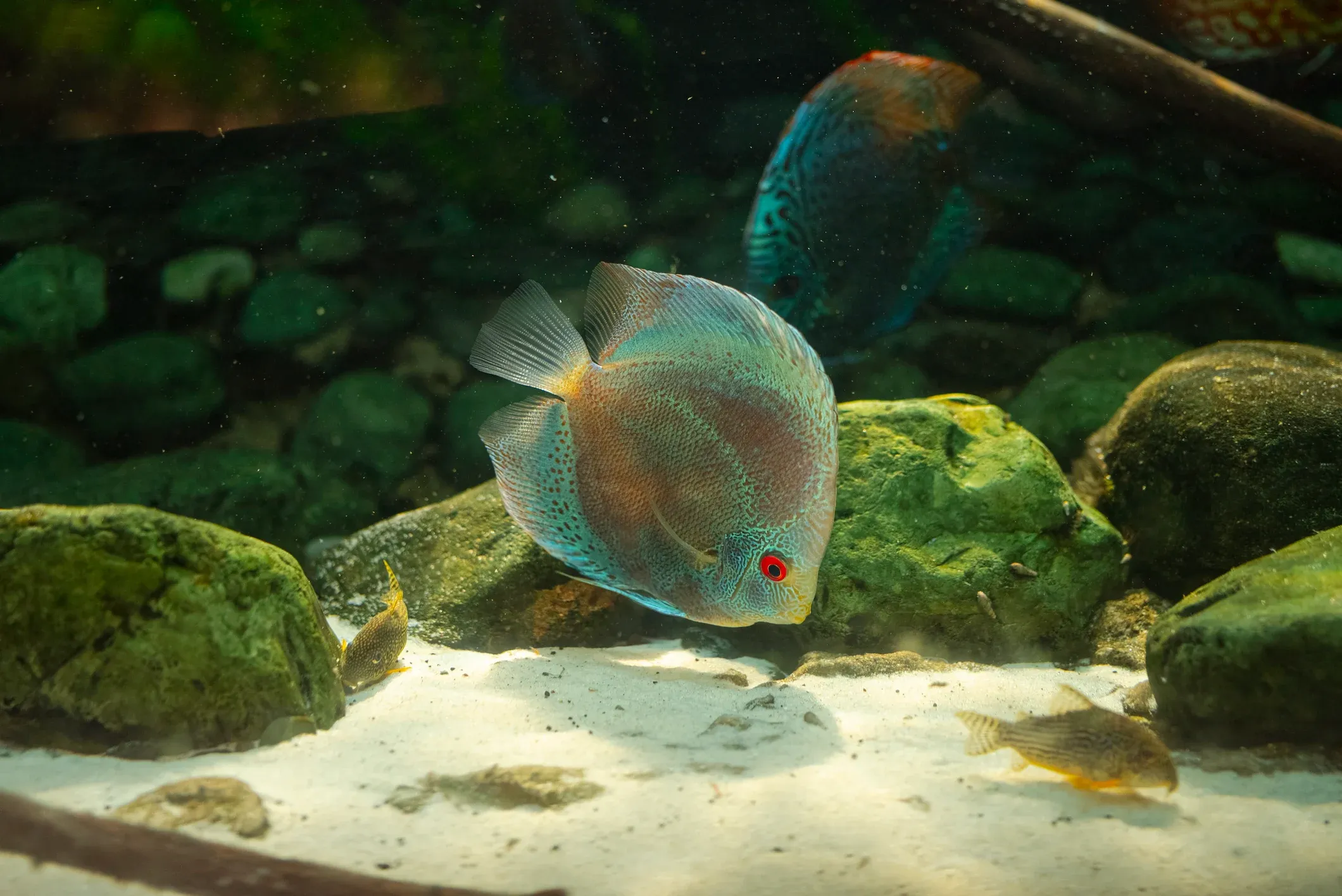
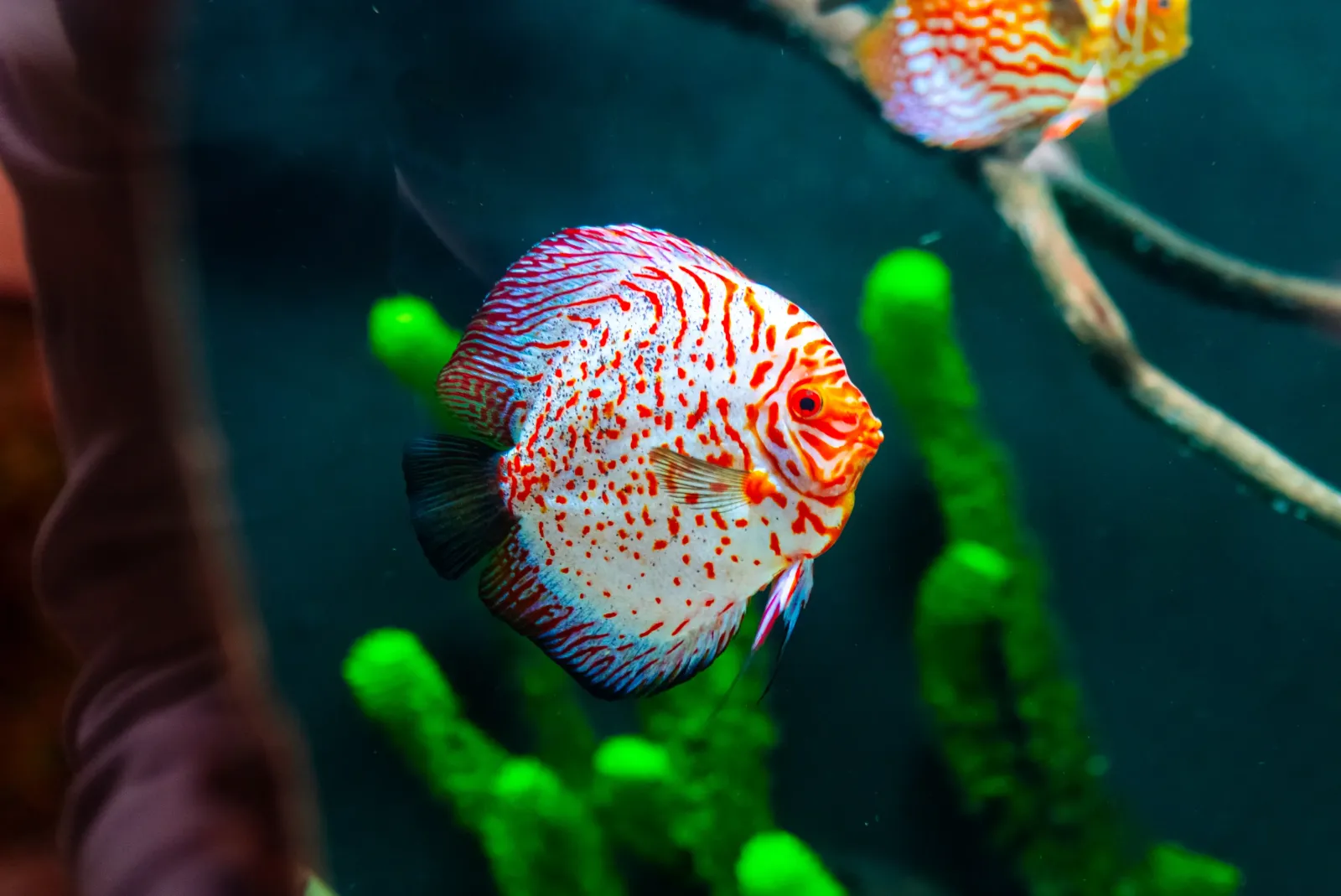
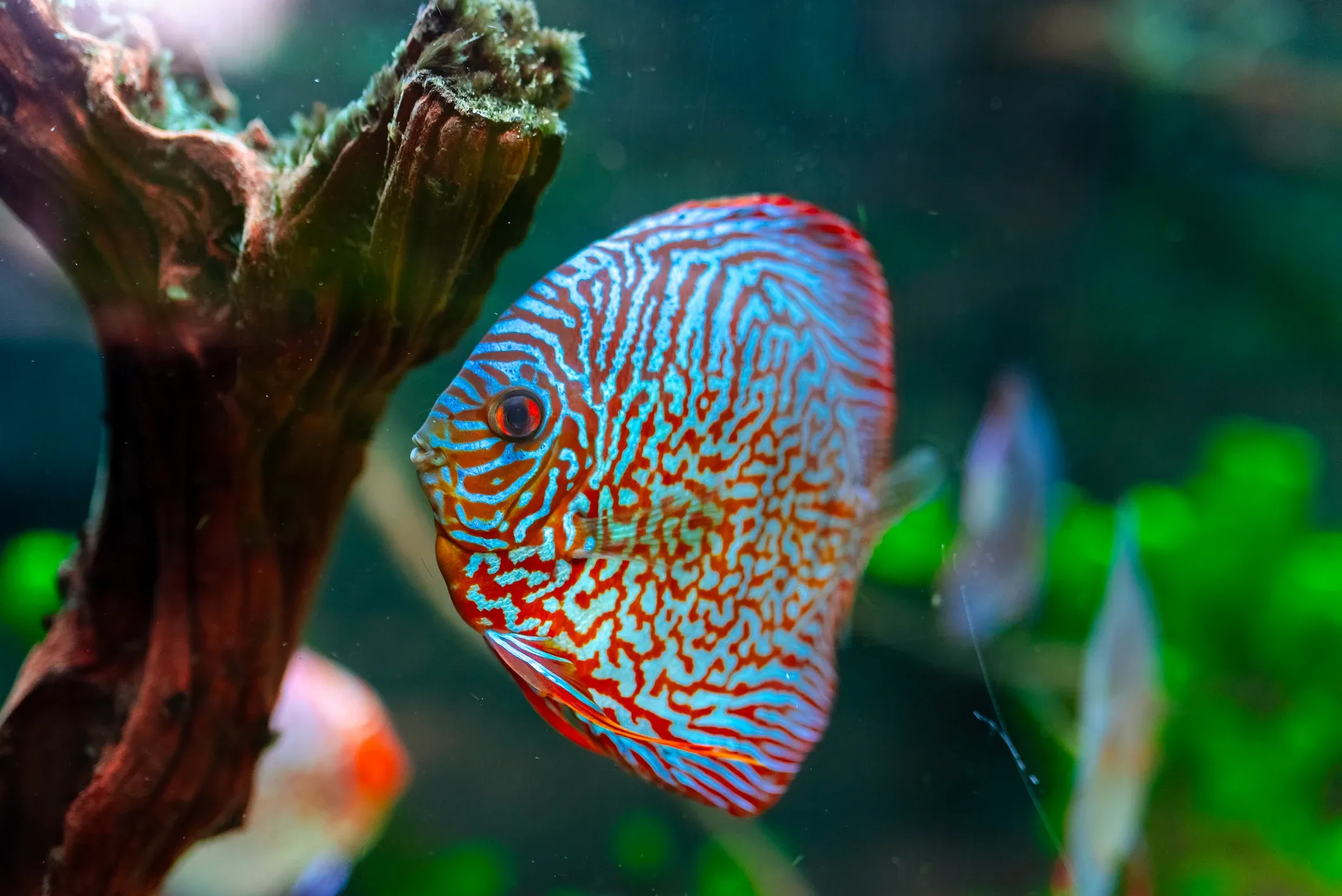
The discus fish (Symphysodon aequifasciatus) is a striking cichlid native to the lower reaches of the Amazon River and its tributaries in South America. It is easily recognised by its rounded, laterally compressed body, from which its common name is derived. This species displays an extraordinary diversity of colours and patterns, with no two individuals being exactly alike. Adults can reach up to 13.5 cm in length and are renowned for their exceptional parental care. After hatching, the fry feed on a nutritious mucus produced by the skin of both parents, an adaptation that plays a vital role in their survival.
Geographical distribution
Found in South America, specifically in the lower Amazon River and its tributaries.
Habitat
The discus fish inhabits slow-moving sections of the Amazon with little or no current.
Habitat description: It prefers ecosystems characterised by:
- Deep rocky areas with crevices and sheltered spaces.
- Areas among submerged tree roots.
- Slow-flowing tributaries.
- Flooded forest habitats.
- Dense aquatic vegetation used as shelter.
- Areas inhabited by predators such as piranhas, which influence their cautious behaviour.
Lifestyle and behaviour
The discus fish is a shy species that lives in well-established family groups, sharing its habitat with predators such as piranhas. It exhibits a complex social hierarchy together with outstanding parental care.
Social behaviour
- Live in hierarchical schools.
- Family groups are typically led by an alpha pair.
- Become territorial during the breeding season.
- Shy fish that seek shelter among aquatic vegetation.
Daily activity
- Swim through calm waters among aquatic vegetation.
- Actively search for insects, larvae and planktonic invertebrates.
- Display cautious behaviour due to the presence of predators.
Reproduction
- Courtship begins several weeks before spawning and includes distinctive movements of the dorsal and anal fins.
- The breeding pair establishes and defends a spawning territory.
- During the flood season, the female lays eggs on exposed surfaces such as branches and rocks, where they are fertilised by the male.
- Both parents continuously fan the eggs to ensure proper oxygenation.
- Parents remove unfertilised eggs and those affected by fungal growth.
- Once hatched, the fry remain attached to the parents' bodies, feeding on a nutritious mucus secreted through their skin.
- Parental care is essential for the survival of the young.
Relationship with their environment
- Seek refuge among dense vegetation to avoid predators.
- Prefer calm waters with minimal current.
- Their flattened, rounded body allows them to manoeuvre easily among roots and vegetation.
Diet
In the wild
- Feed mainly on insects and insect larvae.
- Also consume planktonic invertebrates.
Under human care
- Fed twice daily.
- Varied diet consisting mainly of insect larvae, specialised discus food and chopped fish such as tilapia, prawns and trout.
Conservation status
The discus fish (Symphysodon aequifasciatus) is classified as Least Concern (LC) on the Red List of the International Union for Conservation of Nature.
Main threat:
• Potential degradation of Amazonian habitats.