 Home
Home Plan your visit
  Jungle
  Tropical
  Deep Ocean
  School Visits
 Encyclopedia
 Blog
Blog


Fish species in the Canary Islands
Located in the heart of the Atlantic Ocean, the Canary Islands are a true paradise for discovering marine life. Their crystal-clear waters, together with where different ocean currents meet, create a unique environment rich in biodiversity.
From fish that live close to the coast to species that inhabit the depths, this archipelago is a key destination for sea lovers. Here, small colourful fish coexist with large predators, creating an underwater world that is as varied as it is fascinating.
Factors that influence marine diversity in the Canary Islands
The subtropical climate, warm waters and the presence of ecosystems such as seagrass meadows and volcanic reefs support both native and migratory species.
Furthermore, their strategic location makes the Canary Islands an important migratory corridor for fish species travelling between the North and South Atlantic.
Most common fish species in the Canary Islands
The Canary Islands are home to a wide variety of fish species that can be observed both along the coast and further out to sea. Below, we focus on some of the most representative species.
-
Coastal fish
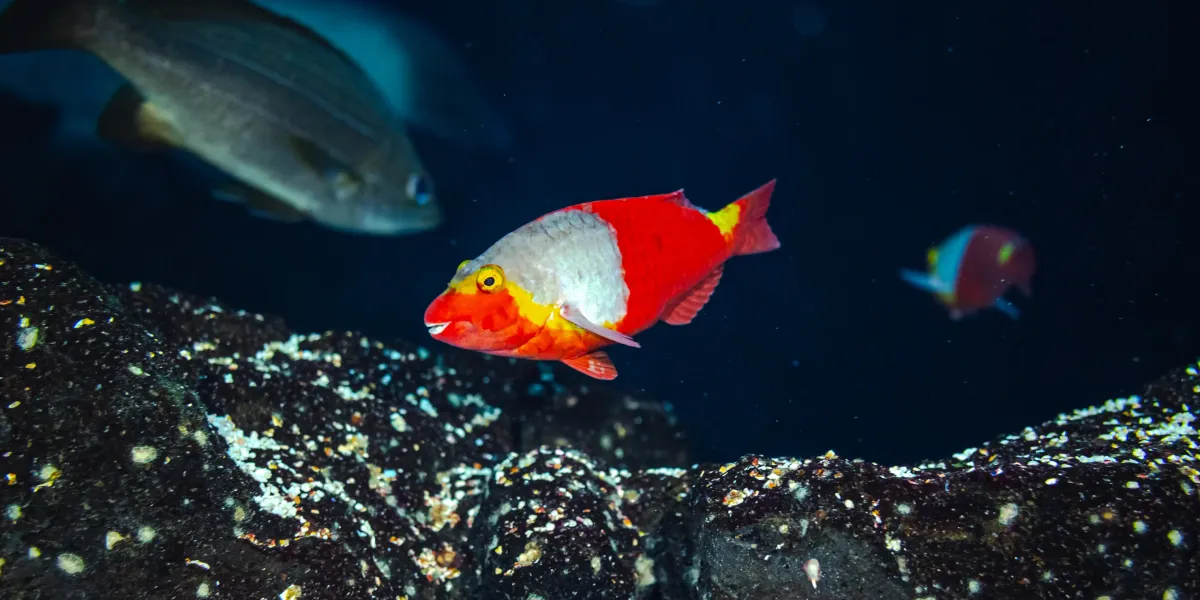
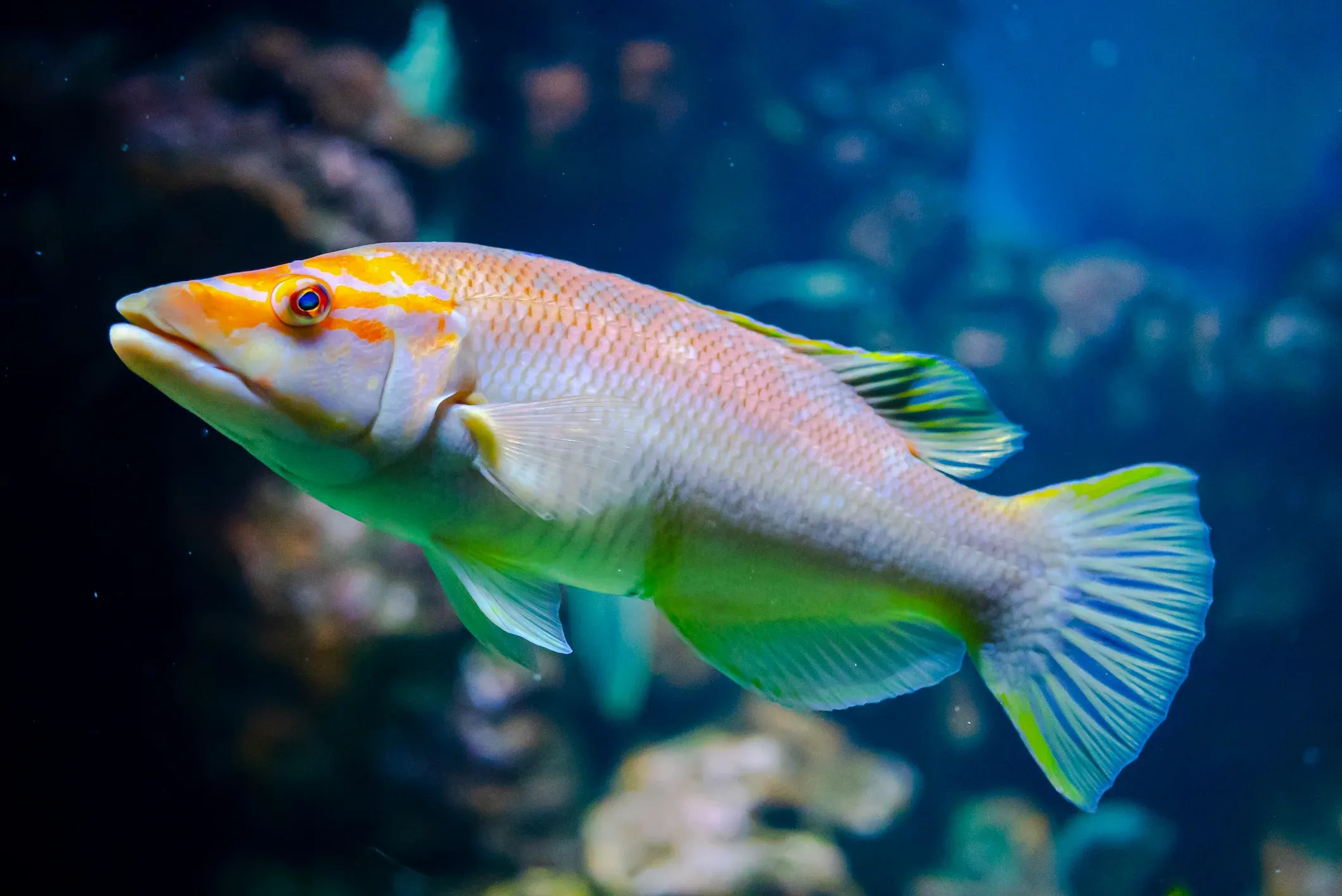
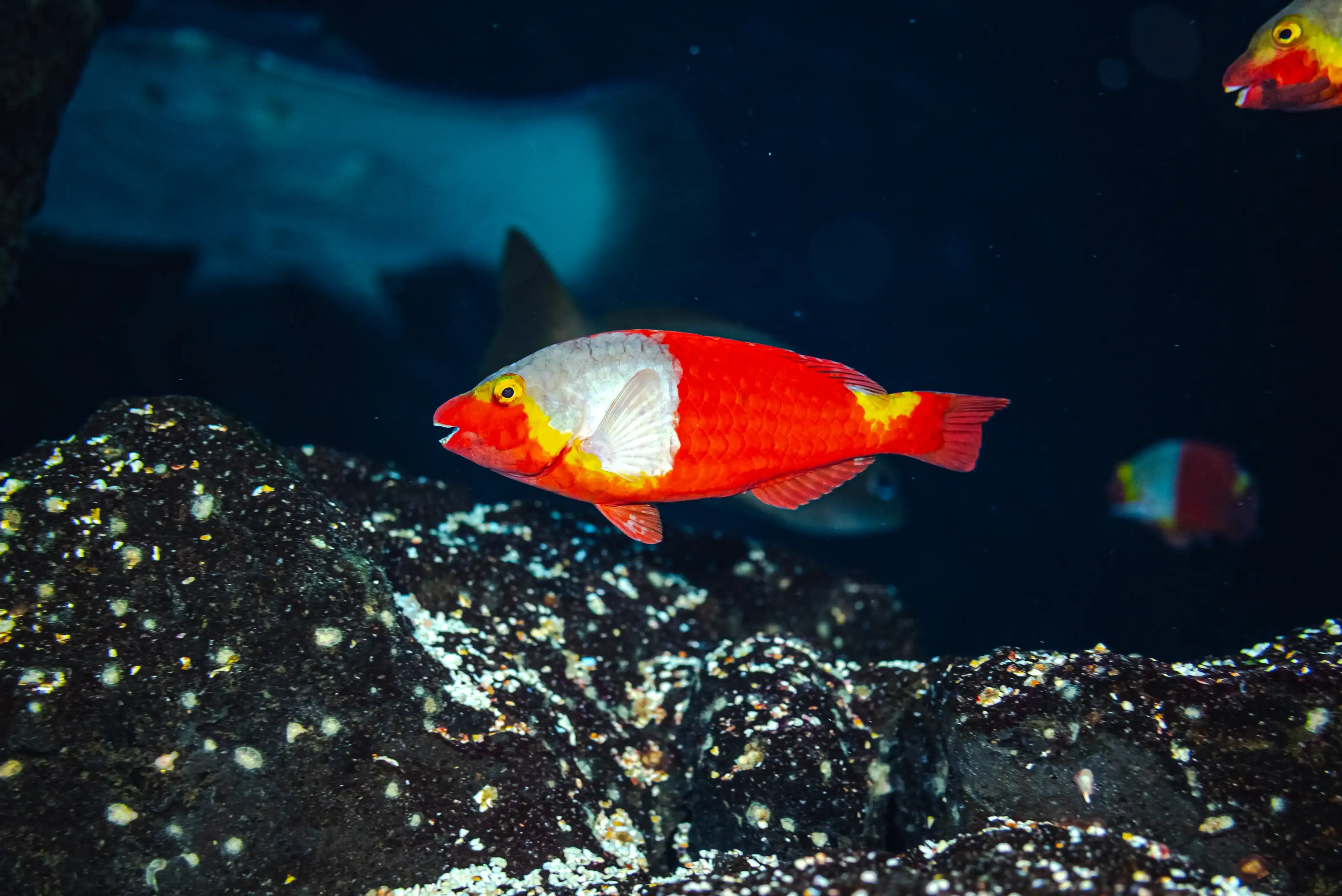
In the waters close to the coast, it is common to see species such as the parrotfish (Sparisoma cretense), one of the Canary Islands’ most iconic fish, famous for its colourful appearance and highly valued in local cuisine. You may also spot white seabream (Diplodus sargus) and salema porgy (Sarpa salpa) swimming in large shoals near rocky seabeds and reefs.
-
Deep-water fish
Further from the coast, species such as wreckfish (Polyprion americanus) and pink dentex (Dentex gibbosus) can be found, both of which are popular among local fishermen. Moray eels (Muraena augusti) can also be found on rocky seabeds and in shallow areas; these nocturnal animals seek shelter in cracks and holes and are highly territorial predators.
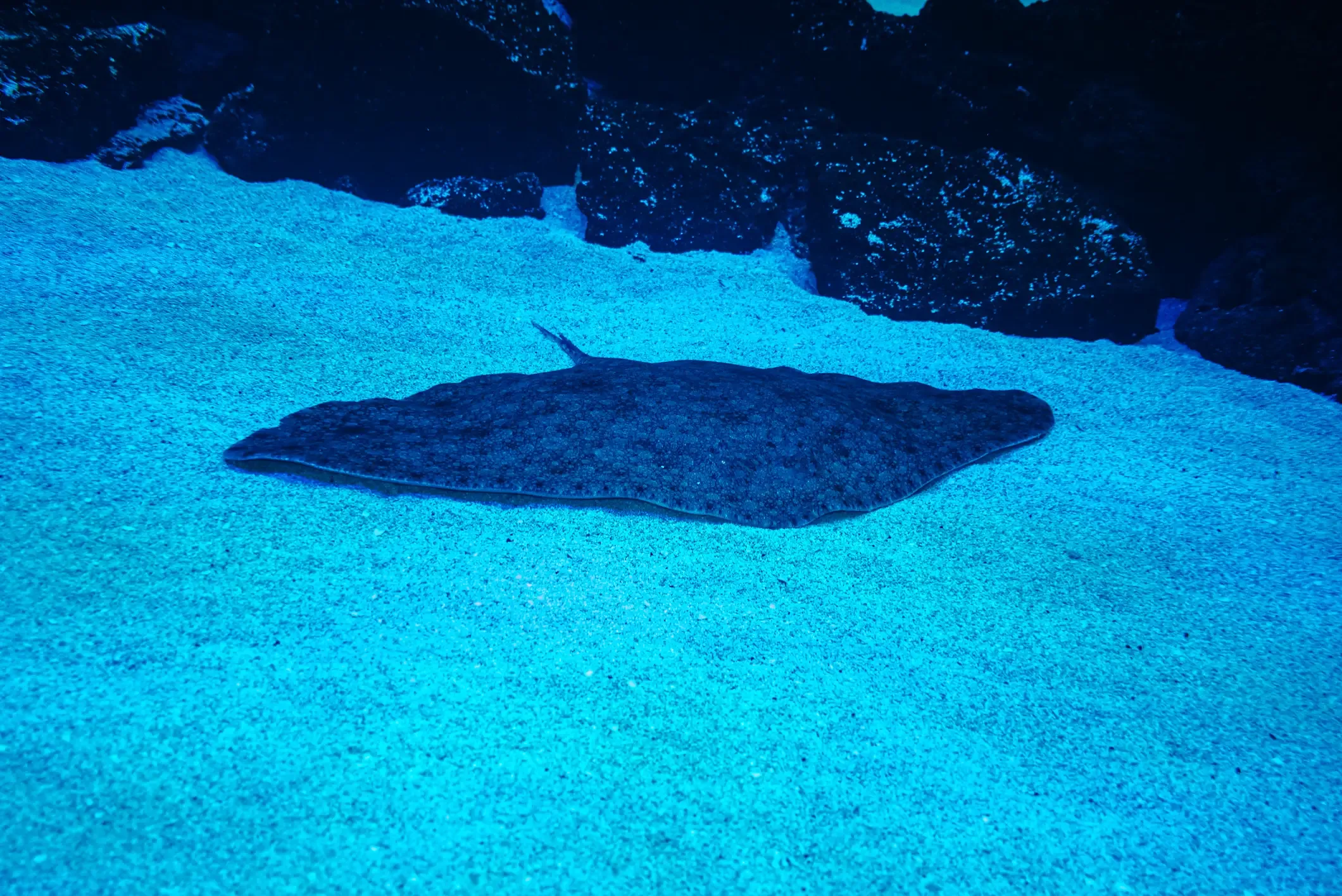
In addition, sharks such as the angelshark (Squatina squatina) can also be found here. This endangered species finds refuge in Canarian waters. It is also possible to encounter spiny butterfly rays (Gymnura altavela), a species of ray known for their calm behaviour and distinctive slow swimming in quiet waters.
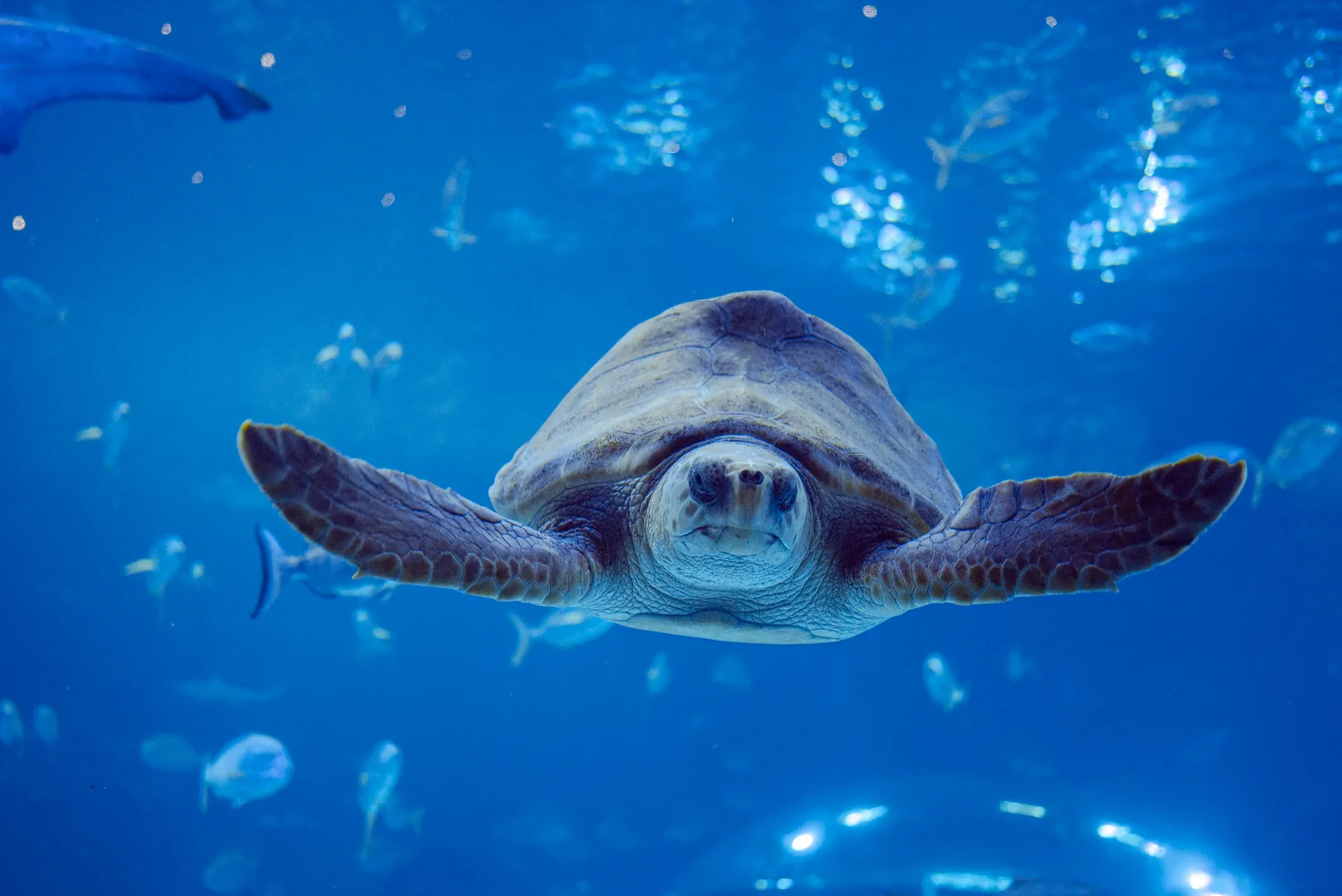
The importance of conserving marine ecosystems
The abundance of fish in the Canary Islands is important not only for tourism and fishing, but also for maintaining the ecological balance of the sea. However, overfishing, pollution and climate change pose direct threats to these species.
To protect this natural wealth, it is therefore essential to promote sustainable practices and support conservation efforts.
Protected areas in the Canary Islands
The Canary Islands have a network of protected marine and terrestrial areas that are closely linked to the Atlantic Ocean and its biodiversity.
Among the marine areas, the La Graciosa and Islets Marine Reserve plays a key role in conserving marine species and seabeds; the El Hierro - La Restinga Marine Reserve is known for its deep waters and rich diversity of fauna; and the La Palma Marine Reserve protects unique volcanic underwater ecosystems.
As for terrestrial areas with a strong connection to the sea, Timanfaya National Park in Lanzarote influences nearby seabeds due to its volcanic origin, creating distinctive underwater habitats. Meanwhile, Garajonay National Park in La Gomera contributes to the island’s water balance, which indirectly supports the conservation of its coastal waters.
In addition to marine reserves, the Canary Islands also have an extensive network of marine Special Areas of Conservation (SACs), included in the Natura 2000 Network. These areas protect habitats and species of great ecological value, such as seagrass meadows, rocky seabeds and cetacean transit areas. Notable examples include the Teno–Rasca marine strip, the seagrass meadows of Gran Canaria and the Mar de las Calmas in El Hierro.
How can you contribute to conservation?
Visitors can help by following local regulations, practising responsible diving, avoiding the purchase of protected species and respecting minimum fishing sizes.
Ultimately, we can all do our part to preserve the rich marine ecosystem of the Canary Islands for future generations.
Discover the incredible marine biodiversity of the Canary Islands at Poema del Mar
If you want to see up close the more than 70 Canarian species that inhabit our seas, this is the place for you. In the heart of Gran Canaria, the aquarium is much more than just a visit: it is an experience dedicated to conservation, education and the admiration of marine life.
Be amazed by the richness of the Atlantic Ocean by the richness of the Atlantic Ocean and discover life beneath the sea without leaving the island.
Visit our website and start your journey before you arrive: we look forward to welcoming you to Poema del Mar!