 Home
Home Plan your visit
  Jungle
  Tropical
  School Visits
 Encyclopedia
 Blog
Blog


Blinda Cave Tetra
Astyanax jordani
Family: Characidae | Genus: Astyanax
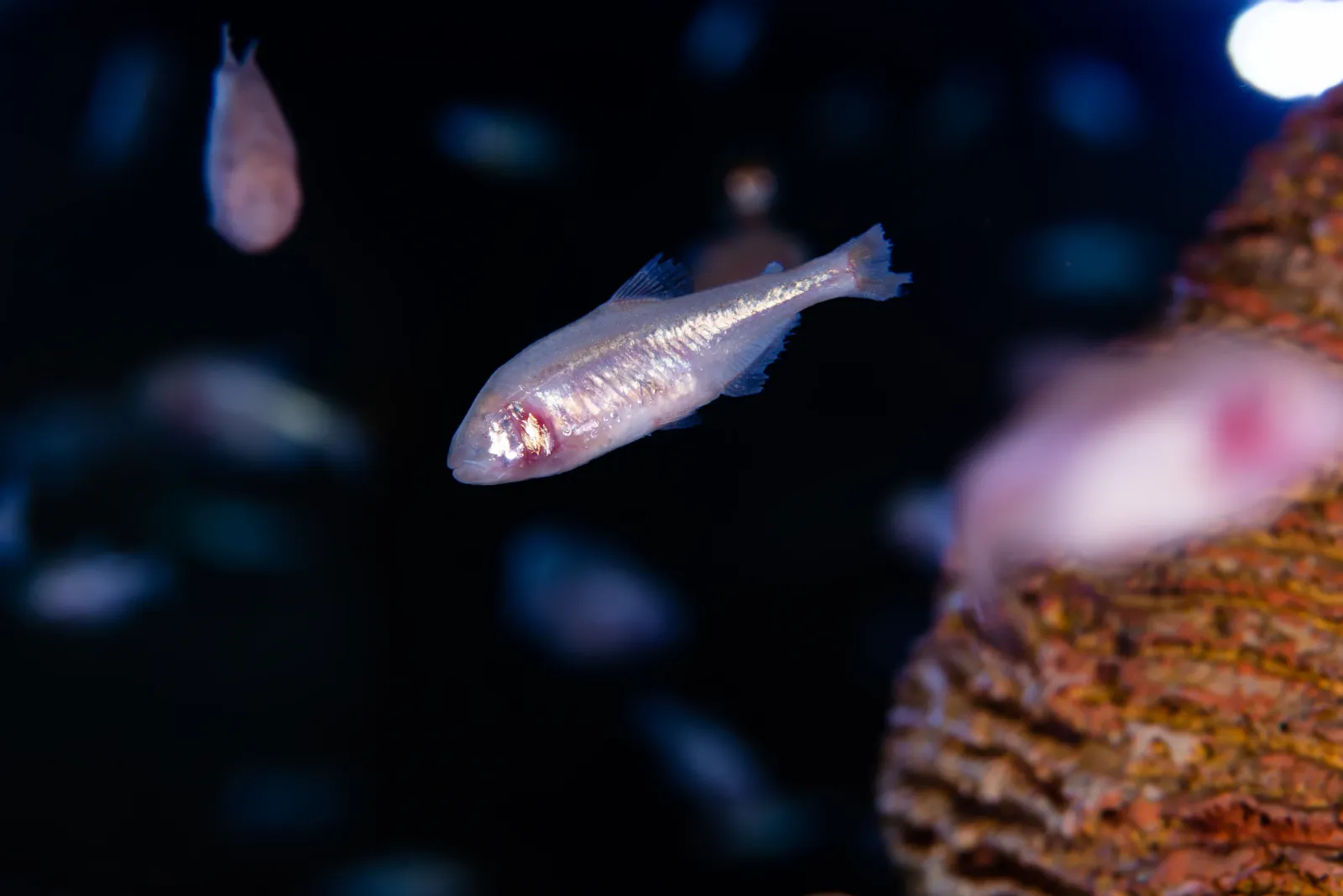
Freshwater | Carnivore | Cenotes and cave systems | North America (Mexico) | Up to 12 cm | Up to 4 years
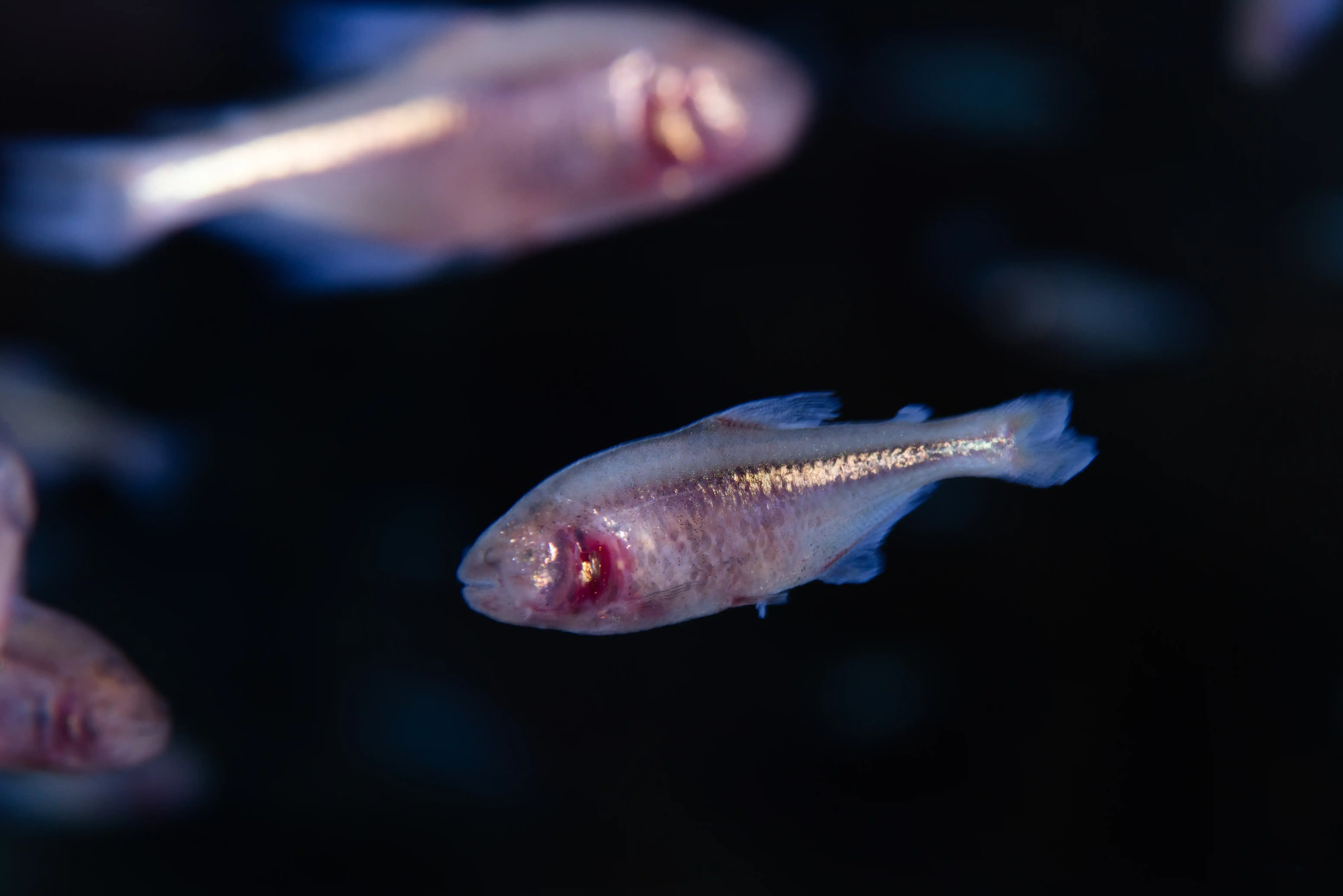
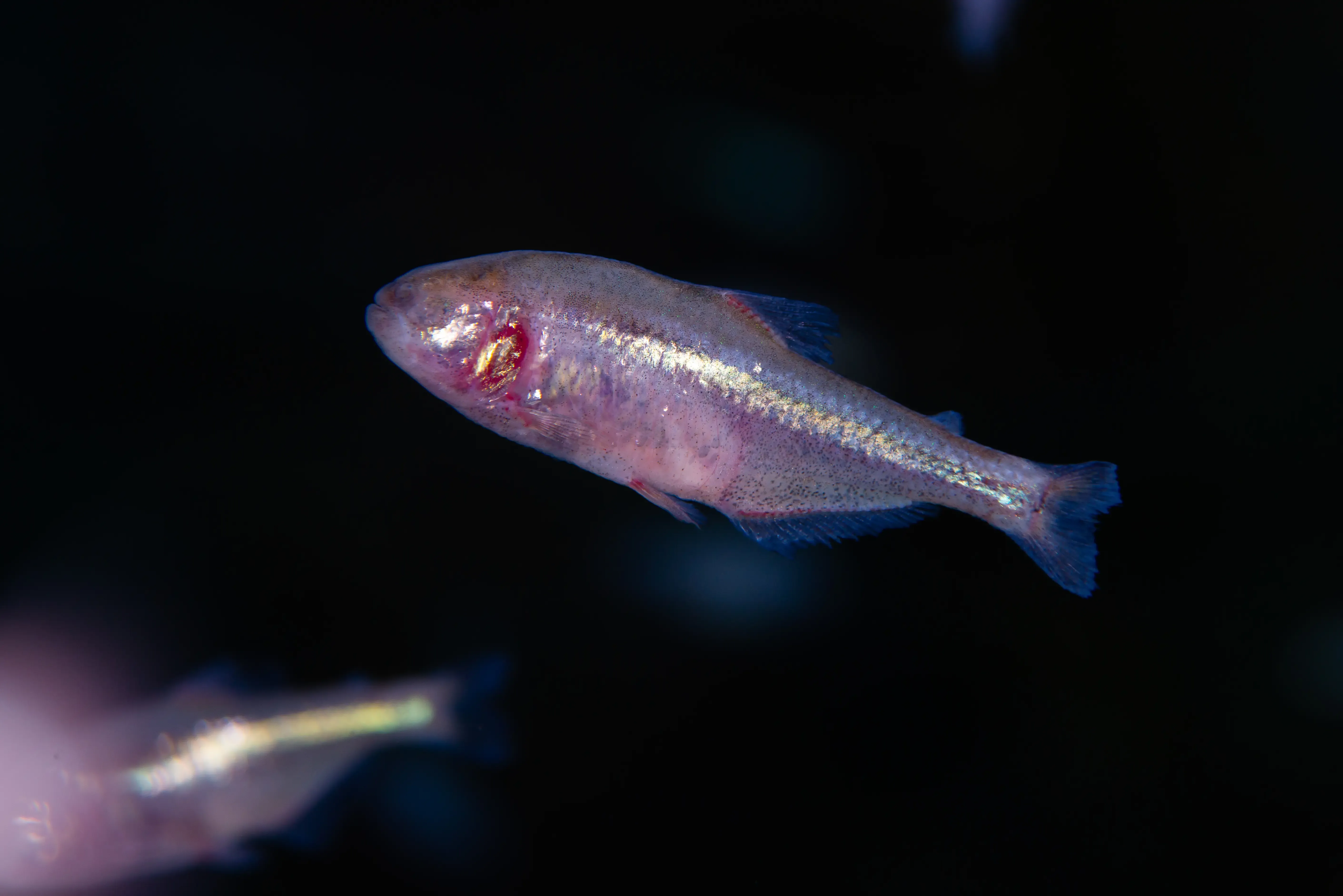
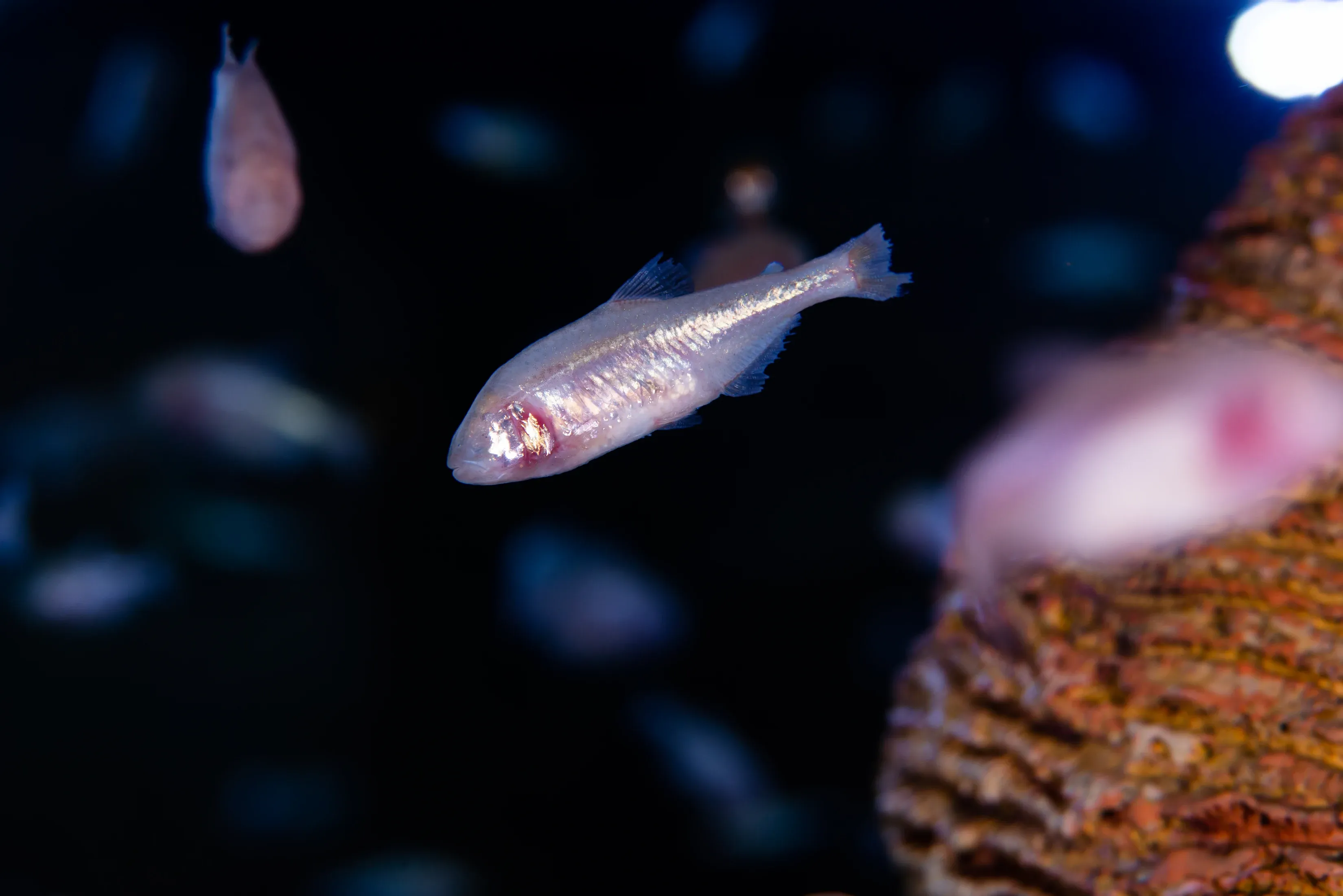
The Blind cave tetra (Astyanax jordani) is one of the most remarkable inhabitants of Mexico’s underground cave systems. It belongs to a group of closely related populations commonly known as the Mexican tetra (Astyanax mexicanus complex) but has evolved extraordinary adaptations to life in permanent darkness. Growing around 12 cm in length, this small freshwater fish is completely blind and has a translucent pink body.
Millions of years ago, ancestral populations became isolated inside caves in the northeastern Mexico. They experienced amazing evolutionary changes throughout time, including the loss of their eyes, a gradual loss of pigmentation, and the development of highly specialized sensory systems that allowed them to navigate and thrive in the absence of light. They can orient themselves through touch and water vibrations instead of sight because their skin is coated in receptors that can sense even the smallest movements in the water.
Their eating habits are yet another remarkable adaption. Due of their limited capacity to control satiety, blind cave tetras can eat continually anytime food is available. This action significantly increases their chances of surviving in an environment where nutrients are limited and unpredictable, frequently resulting from bat guano falling into the caverns.
Geographical distribution
Found in North America, specifically in north-eastern Mexico, where it inhabits underground cave systems.
 Habitat
Lifestyle and behaviour
Diet
In the wild
- Feed on small invertebrates, including crustaceans, insects and worms.
- Consume decomposing organic matter.
- Bat guano represents one of the main nutrient sources within cave ecosystems.
Under human care
- Fed twice daily from Monday to Saturday, with one fasting day on Sunday to support digestive health.
- Diet consists of specially formulated granules and flakes that meet the species' nutritional requirements.
- Care is taken to avoid overfeeding despite their naturally continuous feeding behaviour.
Conservation status

Related species at Poema del Mar

Neon Tetra

Black Neon Tetra
