Australian Rree Frog
Litoria caerulea
Family: Pelodyadidae | Genus: Litoria
Streams and swamps | Carnivorous | Nocturnal | Australia, Indonesia, Papua New Guinea | Up to 10 cm | 10–16 years
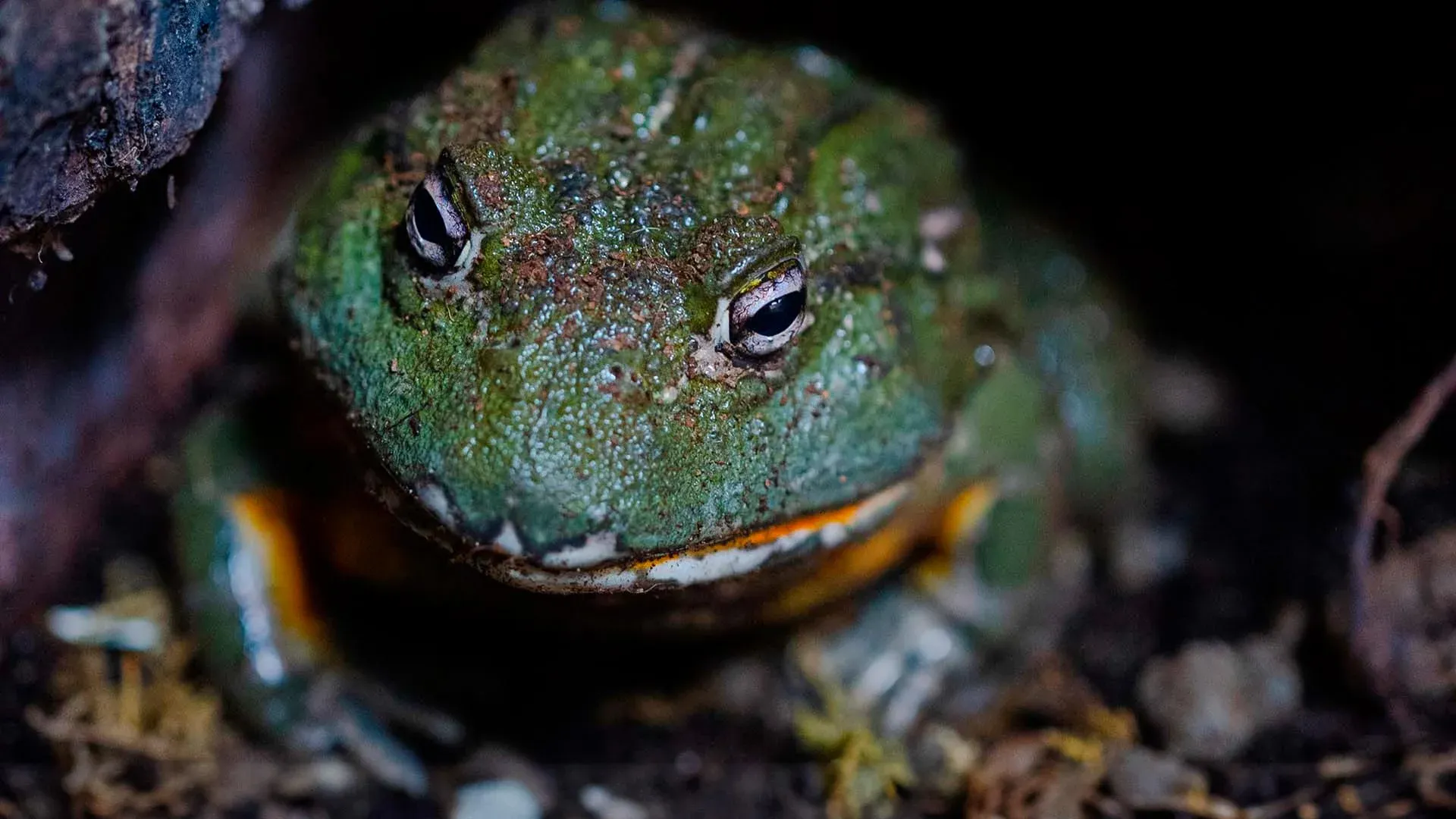
The Australian tree frog (Litoria caerulea), also known as the Australian green tree frog, is a nocturnal amphibian that inhabits tropical regions of Australia and New Guinea.
Although its colouration can sometimes be brownish, this species is typically recognised for its bright green colour, smooth skin and relatively large size (up to 10 cm). It stands out for its adaptability and its ability to live near human settlements. Its calm nature and longevity have made it one of the most well-known and appreciated frog species under human care.
Geographical distribution
The green tree frog is found mainly in Australia (particularly in the northern and north-eastern parts of the country), Indonesia and New Guinea. It has also been successfully introduced in Florida (USA). It prefers warm, humid environments and can be found both in tropical rainforests and suburban gardens thanks to its tolerance of varied environmental conditions.
Habitat
This species occupies a wide variety of humid and forested habitats and is most comfortable in environments with abundant vegetation. Its main habitat characteristics include:
- Humid tropical and subtropical forests: prefers areas with dense vegetation cover.
- Proximity to water: frequents ponds, streams and other bodies of water, although it may move to drier areas during warm periods.
- Height and shelter: as an arboreal species, it uses trees, hollow logs and broad leaves as hiding and resting places. In urban areas, it is even commonly found inside letterboxes.
Lifestyle and behaviour
The green tree frog is a solitary and nocturnal animal, with particular behaviours that make it unique among amphibians:
Social behaviour:
- Generally solitary, except during the breeding season.
- Shows mild territorial behaviour, especially among males.
Daily activity:
- Nocturnal: active at night, when it hunts insects.
- During the day, it shelters in cool, shaded places to avoid dehydration.
Reproduction:
- Oviparous species.
- Breeding occurs during the rainy season.
- Males emit loud, deep calls to attract females.
- Females lay clusters of 200 to 2,000 eggs in calm bodies of water, where they hatch into tadpoles in approximately six months.
Interaction with its environment:
- Capable of secreting a waxy substance through its skin to prevent moisture loss.
- Its skin contains antimicrobial peptides that protect it from infections and have even been studied for medical applications.
Diet
In the wild
- Insects (crickets, moths, cockroaches).
- Spiders and other small invertebrates.
- Very occasionally, adult specimens may consume small animals such as newborn mice.
Under human care
-
Diet based on crickets, mealworms and occasionally newborn mice, if the specimen is an adult.
-
Requires calcium and vitamin supplements to remain healthy.
Conservation status
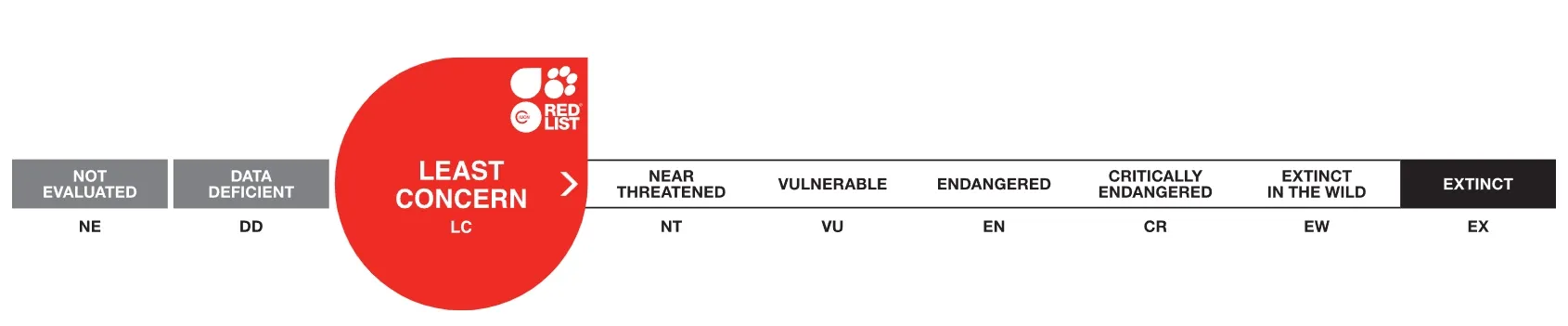
The green tree frog (Litoria caerulea) is listed as Least Concern (LC) by the IUCN Red List. Although its population is stable across much of its natural range, there are threats that require attention.
Main threats:
- Habitat loss: deforestation and urban expansion reduce natural areas where it can live.
- Climate change: affects rainfall and temperature patterns, altering its reproductive cycles.
- Pollution and diseases: sensitive to water pollution and especially vulnerable to chytridiomycosis, a fungal disease that affects many amphibian species globally.